


Eosinophilic esophagitis
Content date: 10 November 2026
A chronic immune-mediated inflammation that may make swallowing difficult. Thorough chewing helps, but does not replace treatment of inflammation and biopsy follow-up.
Your next step
Check how to use your treatment and when biopsies are due, and do not ignore food sticking.
Get urgent help: If food remains stuck or liquids will not pass, go to the emergency department without waiting, even if you can swallow saliva. Inability to swallow saliva, drooling, difficulty breathing or severe chest pain needs immediate help. Stop eating and drinking; do not try to push food down with water or make yourself vomit.
Understanding the condition: what are eosinophils?
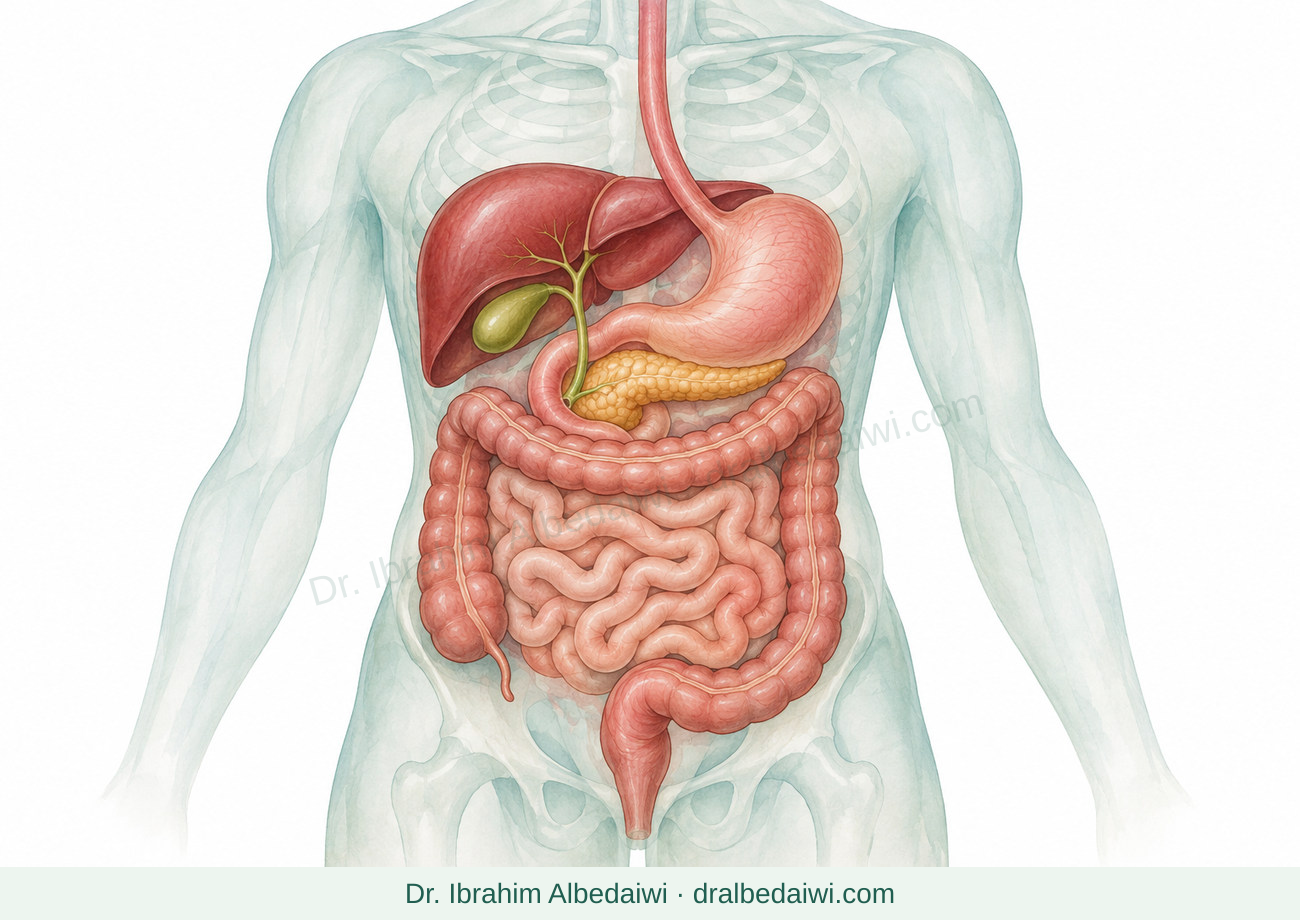
- The esophagus is the muscular tube that moves food from the mouth to the stomach. Eosinophils are white blood cells involved in immune and allergic reactions. In this condition they accumulate in the esophageal lining, causing chronic inflammation, often through an immune response to food or environmental triggers.
- Persistent inflammation may reduce flexibility and cause rings or narrowed areas, making solid food harder to pass. Difficulty swallowing meat or bread and food sticking are characteristic. People may automatically learn to eat slowly and avoid certain foods, appearing well despite the ongoing problem. Tell your doctor if you need to cut food into small pieces or drink water to push it down.
Is it reflux or an ordinary food allergy?
- Some symptoms resemble reflux, and the two conditions can coexist, but their mechanisms and follow-up plans differ. You may also have asthma, eczema or allergic rhinitis. This does not mean skin or blood allergy tests will accurately identify the trigger food; the response is not always the same as a familiar immediate allergy.
- Your doctor confirms the diagnosis using symptoms, esophageal biopsies and assessment of other causes of increased eosinophils. Treatment aims to settle inflammation and prevent scarring and food impaction, not simply make swallowing easier. Medicines or an appropriate diet can control it, with dilation if needed. Long-term follow-up is usually necessary even when swallowing improves.
How is it diagnosed?
- We need compatible symptoms and an endoscopy with esophageal biopsies, while assessing other causes. The endoscopic appearance alone may not be enough.
- Asthma or eczema may occur alongside it, but standard allergy tests do not accurately identify the foods causing esophageal inflammation.
Treatment options
- Options include acid-reducing medicines, a topical corticosteroid swallowed in a specific way, or a supervised elimination diet. Biologic treatment may suit selected patients.
- Your doctor may recommend dilating a narrowing. Dilation improves the passage of food but does not treat the inflammation itself, so anti-inflammatory treatment continues.
Using treatment and diet
- If a topical steroid is prescribed, ask how to swallow it and how long to avoid food and drink afterwards for your particular product. Do not substitute another inhaler yourself.
- Do not remove milk, wheat, eggs and other foods all at once without supervision. A limited elimination diet may be started and adjusted according to treatment response and biopsy results.
- The diet treats the disease and needs nutritional monitoring. Excluded foods should be reintroduced according to a plan, not based on symptoms alone.
Safer swallowing and follow-up
- Eat sitting upright, take small bites and chew thoroughly. Avoid large or dry pieces that have previously become stuck.
- We may repeat endoscopy and biopsies after starting or changing treatment. Better swallowing does not guarantee that inflammation has disappeared.
- Continue the agreed treatment to maintain control; the disease may relapse if treatment stops.
Food elimination for eosinophilic esophagitis (EoE)
When to get help
If food remains stuck or liquids will not pass, go to the emergency department without waiting, even if you can swallow saliva. Inability to swallow saliva, drooling, difficulty breathing or severe chest pain needs immediate help. Stop eating and drinking; do not try to push food down with water or make yourself vomit.
Recurring or increasing difficulty swallowing, weight loss, or constantly needing water to pass food.