

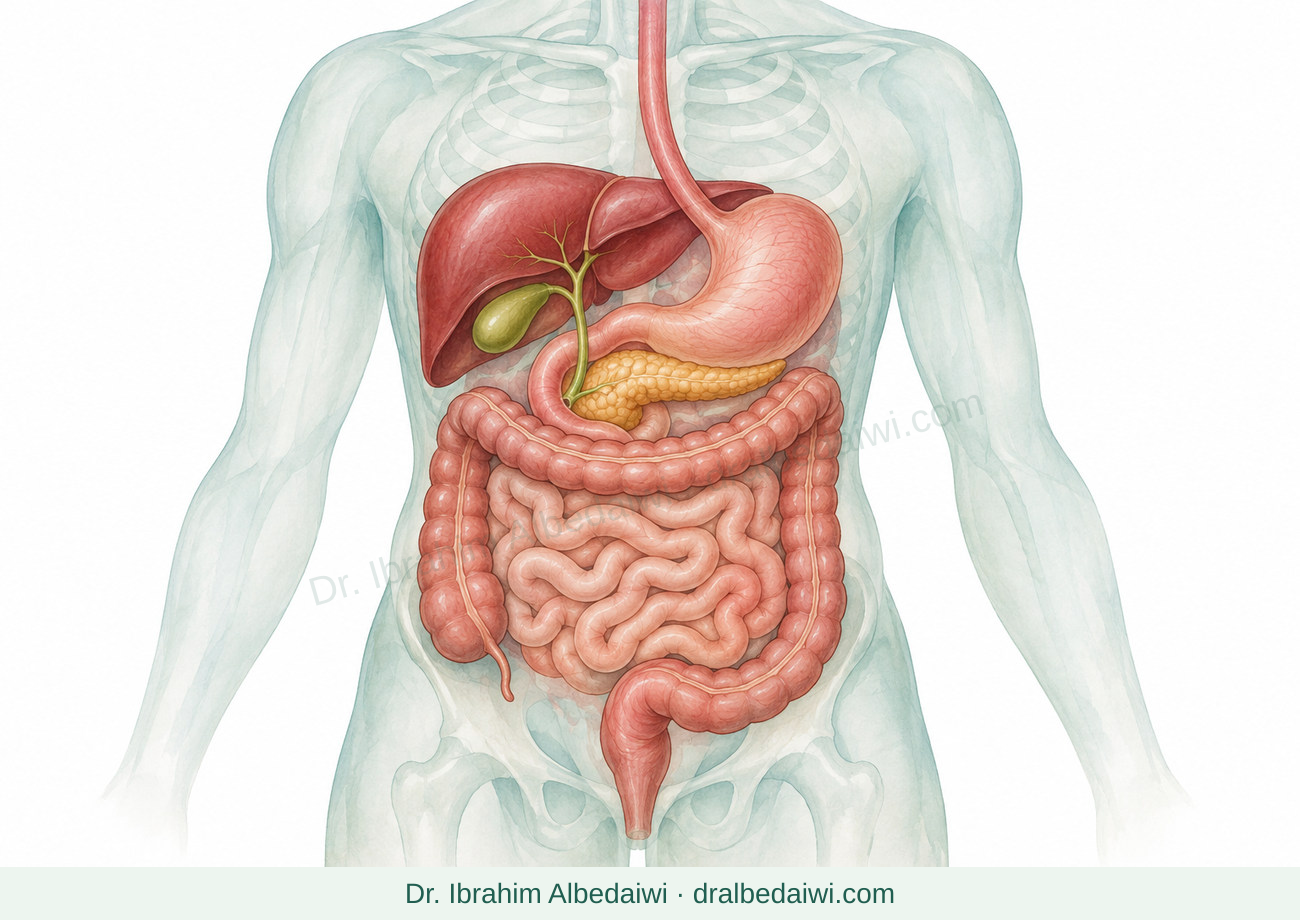

Functional dyspepsia
Content date: 10 November 2026
Symptoms can be distressing despite normal tests. After other causes are assessed, treatment targets stomach sensitivity, movement and its interaction with the brain.
Your next step
Choose smaller meals and record the symptom you most want to improve before your review.
Get urgent help: Pressure-like chest pain with breathlessness or sweating, vomiting blood, black, tarry stool even without dizziness, or sudden severe abdominal pain.
What does “functional” mean?
- The stomach does more than hold food: it stretches to receive a meal, mixes it and gradually moves it into the bowel. In functional dyspepsia, sensitivity or adaptation to food may differ, causing uncomfortable fullness, feeling full after only a few bites, pain or burning in the upper abdomen without a structural illness explaining the symptoms after appropriate assessment.
- “Functional” describes how the system works and interacts with the brain. It does not mean the pain is imagined or everything is caused by anxiety. Food, sleep and stress may influence symptoms, and in some people symptoms start after an infection. IBS or reflux can coexist, but these are not different names for the same condition.
How do we confirm the diagnosis and measure improvement?
- Your doctor distinguishes this pattern from an ulcer, H. pylori, medicine effects or other causes. Age, symptoms and medical history determine whether tests or endoscopy are needed; not every patient needs every test. Dyspepsia is a general symptom, while “functional dyspepsia” follows an assessment supporting that diagnosis.
- Symptoms may fluctuate, and one treatment does not work for everyone. The plan targets the main symptom—fullness, pain or burning—with meal changes and medicines when appropriate. Success means being able to eat and stay active more comfortably, not necessarily eliminating every sensation after every meal. A new symptom or clear change needs reassessment.
How is it assessed?
- We review medicines, including painkillers, and test for H. pylori when appropriate. Endoscopy depends on age, risk factors and warning signs.
- Not every case needs every test. Repeated vomiting, swallowing difficulty or weight loss may change the assessment plan.
How is it treated?
- Confirmed H. pylori is treated. Depending on symptoms, an acid-reducing medicine or a medicine that regulates pain sensitivity or stomach movement may help.
- Some medicines that modify pain signals are used at low doses; prescribing them does not mean the problem is only psychological.
- Relaxation exercises or treatment directed at the brain–gut interaction may help. Review response with your doctor rather than changing several treatments at once.
Try simple adjustments
- Eat smaller amounts regularly and chew slowly. Reduce fried or fatty meals if they increase fullness.
- Record foods linked to your symptoms. Coffee and fizzy drinks bother some people but are not prohibited for everyone.
- Do not automatically exclude gluten or milk. See a dietitian if you become afraid of most foods or lose weight.
Monitor what matters to you
- Choose a goal such as finishing a small meal comfortably or reducing pain episodes. Record symptoms and treatment timing for two weeks.
- Improvement may be gradual. If treatment does not help, we review the diagnosis, adherence and side effects rather than increasing medicines at random.
- Tell your doctor about new symptoms; do not attribute new chest pain or bleeding to dyspepsia.
When to get help
Pressure-like chest pain with breathlessness or sweating, vomiting blood, black, tarry stool even without dizziness, or sudden severe abdominal pain.
Swallowing difficulty, repeated vomiting, anemia, unintentional weight loss or worsening despite treatment.
Guides for your care journey
Read the related guides together: