


Gastroparesis: delayed stomach emptying
Content date: 10 November 2026
Food leaves the stomach more slowly without a blockage. Changing meal size and texture and treating the cause can support nutrition and reduce nausea.
Your next step
Divide meals into smaller portions, adjust their texture, and review your glucose and vomiting plans.
Get urgent help: Vomiting that prevents fluid intake with dehydration or fainting, vomiting blood, severe pain and swelling, or a major glucose disturbance with significant illness.
Delayed movement, not a blockage
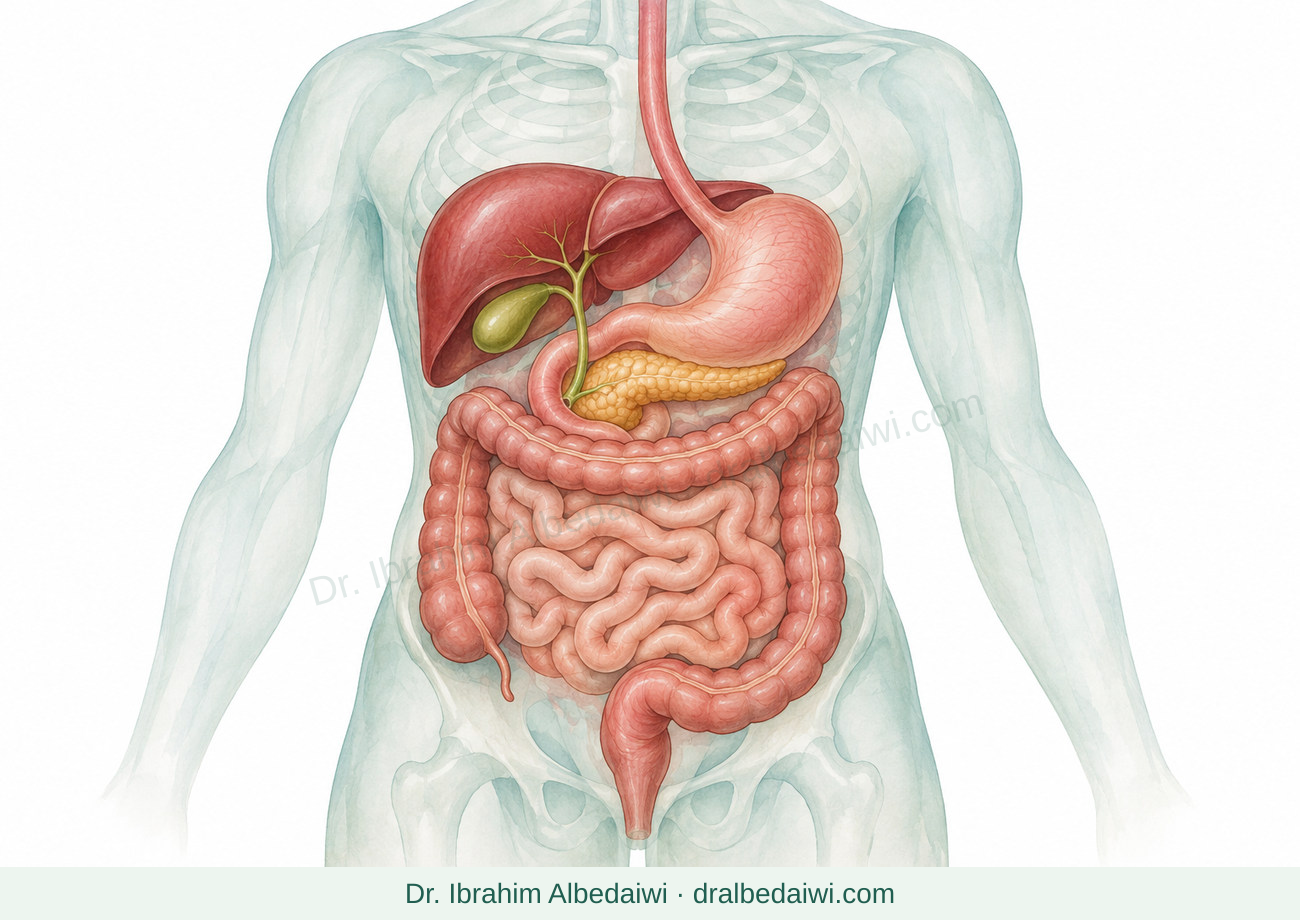
- Normally, stomach nerves and muscles coordinate grinding food and moving it into the small bowel. In gastroparesis this movement is delayed without a physical blockage preventing passage. Food may therefore remain in the stomach longer than usual.
- It can result from nerve damage associated with diabetes, some operations or certain medicines; sometimes no clear cause is found. Not every feeling of slow digestion or fullness is gastroparesis. Functional dyspepsia and other conditions can cause similar symptoms and need a different plan.
How is it confirmed, and why does nutrition matter?
- Symptoms include feeling full after a few bites, fullness lasting hours, nausea, vomiting and sometimes pain. Markedly reduced intake can cause dehydration, weight loss and nutritional deficiencies. In diabetes, unpredictable food absorption may make glucose control harder.
- After ruling out blockage and reviewing medicines, a test that measures the emptying of a standard meal may be used. Food residue seen at endoscopy alone does not establish the diagnosis. Treatment aims to maintain nutrition and fluids, reduce nausea, improve movement and address treatable causes. Response varies: food texture, medicines and follow-up may need adjustment, while specialist procedures or additional nutritional support are reserved for more severe cases.
Confirming the cause
- First, blockage is excluded. Delayed emptying is usually confirmed using a standardized four-hour solid-meal gastric emptying test; shorter tests may miss some cases. The team will explain which medicines to adjust beforehand and how to manage glucose if you have diabetes.
- Tell your doctor about diabetes or weight-loss medicines such as semaglutide and tirzepatide, and opioid painkillers, which may affect stomach emptying. Do not stop them yourself.
Treatment options
- Medicines may be prescribed to improve stomach movement or reduce vomiting. Your doctor chooses the medicine and duration according to benefits and side effects.
- If involuntary movements or facial or neck spasms occur while taking a medicine for stomach movement, seek prompt assessment and do not take another dose before receiving advice.
- Severe cases may need nutritional support or specialist procedures. Preventing dehydration and malnutrition matters as much as relieving nausea.
Planning meals
- Divide food into five or six small meals. Choose soft or finely chopped foods such as smooth soup, soft rice, mashed potato and tender protein.
- Reduce fat and coarse fiber if these worsen symptoms. Avoid hard vegetable pieces, skins and large portions. Do not impose a low-calorie diet without a dietitian.
- Nourishing liquids or puréed foods may be easier to tolerate. Take a gentle walk after eating and avoid lying down immediately.
If you have diabetes
- Irregular stomach emptying can make glucose fluctuate. Ask for a glucose-monitoring and insulin plan for reduced intake or vomiting; do not change doses at random.
- Record weight, vomiting and food and fluid intake. Contact the team if urine output falls or you cannot keep medicines and fluids down.
- Do not use herbs or motility medicines yourself; some can affect heart rhythm or the nervous system.
When to get help
Vomiting that prevents fluid intake with dehydration or fainting, vomiting blood, severe pain and swelling, or a major glucose disturbance with significant illness.
Repeated vomiting, weight loss, reduced food intake or side effects from a motility medicine.