

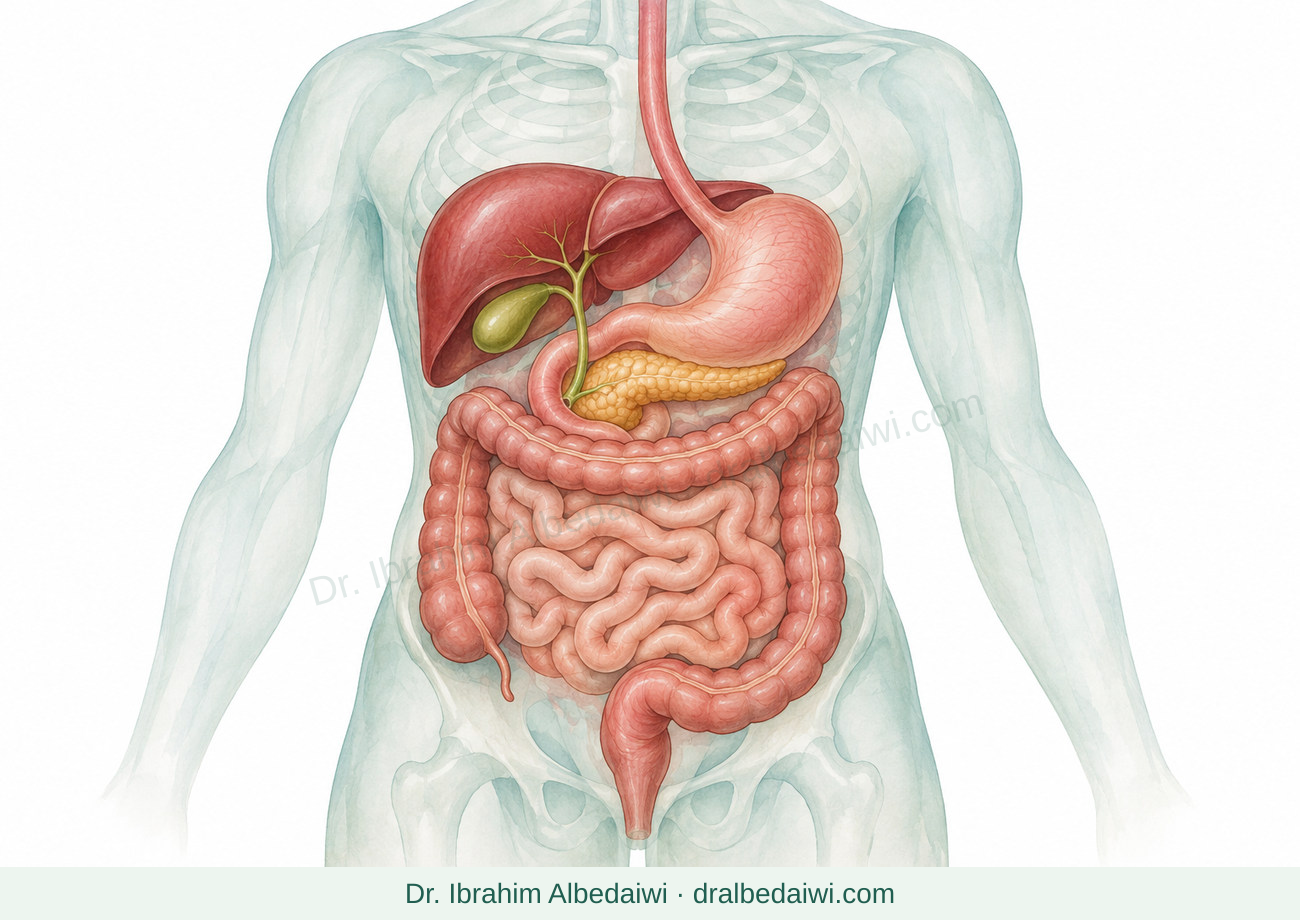

Stomach and duodenal ulcers
Content date: 10 November 2026
An ulcer is a sore in the lining of the stomach or the first part of the small intestine. Treating its cause helps it heal and reduces recurrence.
Your next step
Review the names of your painkillers and confirm the plan to treat the cause and check healing.
Get urgent help: Vomiting blood or material resembling coffee grounds, black, tarry stools even without dizziness, fainting, or sudden severe abdominal pain.
Understanding the condition
- An ulcer differs from indigestion or superficial inflammation. It may cause upper abdominal pain, nausea or fullness, but may cause little obvious pain until bleeding occurs. The pattern of pain alone cannot confirm an ulcer.
- Common causes are Helicobacter pylori infection and anti-inflammatory painkillers such as ibuprofen and diclofenac. Spicy food may bother some people, but is not the main explanation for ulcers.
How is it diagnosed?
- Upper endoscopy may be needed to locate the ulcer and take biopsies, especially from a stomach ulcer, along with testing for H. pylori. Taking a sample does not by itself mean cancer is present.
How is it treated?
- Your doctor prescribes acid-reducing medicine and treats H. pylori if confirmed. Complete the prescribed course even if the pain disappears.
- Review all painkillers with your doctor. Do not stop aspirin or blood thinners prescribed for heart disease or clots yourself; the risks of bleeding and clotting must be balanced with a clear plan.
Do I need repeat testing?
- After treatment for H. pylori, a test at the correct time is needed to confirm it has cleared; pain relief is not enough. See the H. pylori page for testing instructions.
- A stomach ulcer may need repeat endoscopy to confirm healing, depending on its appearance, biopsy results and cause. This differs from a duodenal ulcer, and there is no single timing suitable for everyone.
What can help?
- Stop smoking, and avoid foods that personally trigger symptoms without following a broadly restrictive diet. Do not replace treatment with herbs.
- Tell your doctor about repeated vomiting, loss of appetite or weight loss. Bring your biopsy result and repeat-endoscopy plan if you have one.
When to get help
Vomiting blood or material resembling coffee grounds, black, tarry stools even without dizziness, fainting, or sudden severe abdominal pain.
Pain continuing despite treatment, repeated vomiting, weight loss or a biopsy result that has not arrived.
Related guides
Iron deficiency, anemia and the digestive system