

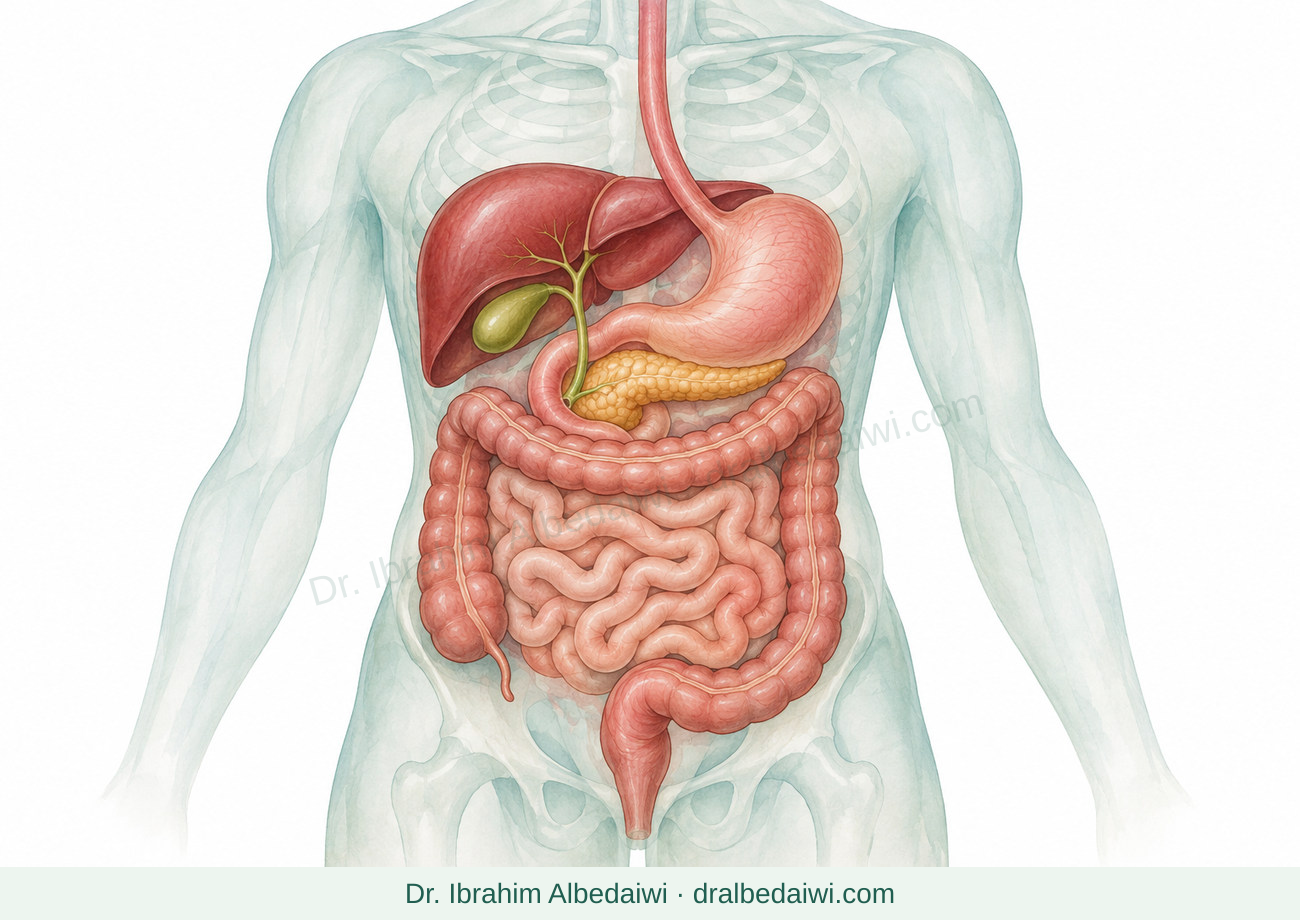

Stomach cancer
Content date: 15 November 2026
Common stomach symptoms do not mean cancer. If cancer is confirmed, tissue findings, stage and overall health guide treatment, which may aim for cure in suitable cases.
Your next step
Ask about the tumor type, stage, further tissue tests and your nutrition plan.
Get urgent help: Vomiting blood, black tarry stools, fainting, sudden severe abdominal pain or vomiting that prevents drinking need urgent care; do not wait for dizziness with bleeding. Follow the cancer team’s urgent instructions for fever during treatment. During chemotherapy, a temperature of 38°C or higher requires immediate contact with the oncology team or emergency care; do not wait for a message reply.
Understanding the disease
- The stomach receives food and mixes it with digestive juices. Stomach cancer develops when some cells grow uncontrollably. The commonest type is adenocarcinoma, starting in the lining; other tumors need different treatment.
- Gastritis or an ulcer does not establish cancer. H. pylori infection, certain chronic stomach changes, smoking or inherited factors may increase risk, but a risk factor does not mean cancer will develop. Pain or one blood test cannot confirm it.
Symptoms that need assessment
- Possible symptoms include increasing difficulty eating, early fullness, persistent nausea, unintentional weight loss or iron-deficiency anemia. Vomiting or bleeding may occur. Many other conditions cause these symptoms, so assessment matters more than assuming cancer or ignoring them.
- Explain their duration, weight changes, swallowing difficulties and family history. Temporary improvement with acid medicine does not replace investigation when concerning symptoms persist.
Confirming diagnosis and stage
- The main test is usually gastroscopy with biopsies: small tissue samples examined by a pathologist. The sample identifies the tumor type. CT scans, and sometimes endoscopic ultrasound or keyhole inspection of the abdomen, assess its extent.
- Stage describes depth, lymph nodes and any spread elsewhere. Tissue may be tested for HER2, PD-L1, DNA repair features and other markers to guide treatment.
- Blood tumor markers alone cannot confirm or exclude stomach cancer, or replace endoscopy and biopsy when indicated. Screening before symptoms differs from investigating an existing symptom.
Choosing treatment
- Specialists in oncology, surgery, endoscopy, imaging and nutrition review the findings with you. Selected very early cancers can be removed endoscopically. Other cases may need removal of part or all of the stomach and nearby lymph nodes, with medicines before or after surgery.
- Targeted medicines or immunotherapy may suit particular tumor features; radiotherapy is used in selected situations. Treatment may aim for cure, disease control or symptom relief. The diagnosis alone cannot predict an individual outcome.
Nutrition and recovery
- Request early nutrition support if eating is difficult or weight is falling. Small frequent protein-rich meals and treatment for pain or nausea may help. Avoid excluding entire food groups or replacing treatment with herbal mixtures.
- Food tolerance changes after stomach surgery. Iron, vitamin B12 and other nutrients may need monitoring and replacement. Report dizziness, sweating or diarrhea after meals so the plan can be adjusted. Psychological support and symptom relief can accompany cancer treatment.
Before the next appointment
- Keep the biopsy report, scan images and medicine list. Ask about H. pylori treatment if present, and family assessment when age or history suggests an inherited cause. Record result appointments and contact details.
Do gastric atrophy or intestinal metaplasia mean cancer?
- These biopsy findings do not by themselves mean cancer. Follow-up depends on their type, extent and your risk factors. H. pylori should be treated if present, with confirmation of clearance. A report mentioning dysplasia needs specialist review and a clear plan. Keep the biopsy report and read the dedicated atrophy/metaplasia guide linked below.
When to get help
Vomiting blood, black tarry stools, fainting, sudden severe abdominal pain or vomiting that prevents drinking need urgent care; do not wait for dizziness with bleeding. Follow the cancer team’s urgent instructions for fever during treatment. During chemotherapy, a temperature of 38°C or higher requires immediate contact with the oncology team or emergency care; do not wait for a message reply.
Worsening swallowing, continued weight loss, poor food intake or uncontrolled pain need early review.
Related guides
Difficulty swallowing and food getting stuck
Iron deficiency, anemia and the digestive system