


Medicines for irritable bowel syndrome (IBS)
Content date: 15 November 2026
Your clinician chooses treatment for your main symptom: constipation, diarrhea or pain. No single medicine suits everyone or permanently cures IBS.
Your next step
Bring a stool and symptom diary plus your medicine list. Agree on one treatment goal, a trial period, and a review date.
Get urgent help: Seek urgent care for black tarry stool, substantial bleeding, severe worsening pain, fainting, or dehydration. Do not assume these are IBS.
What treatment is trying to do
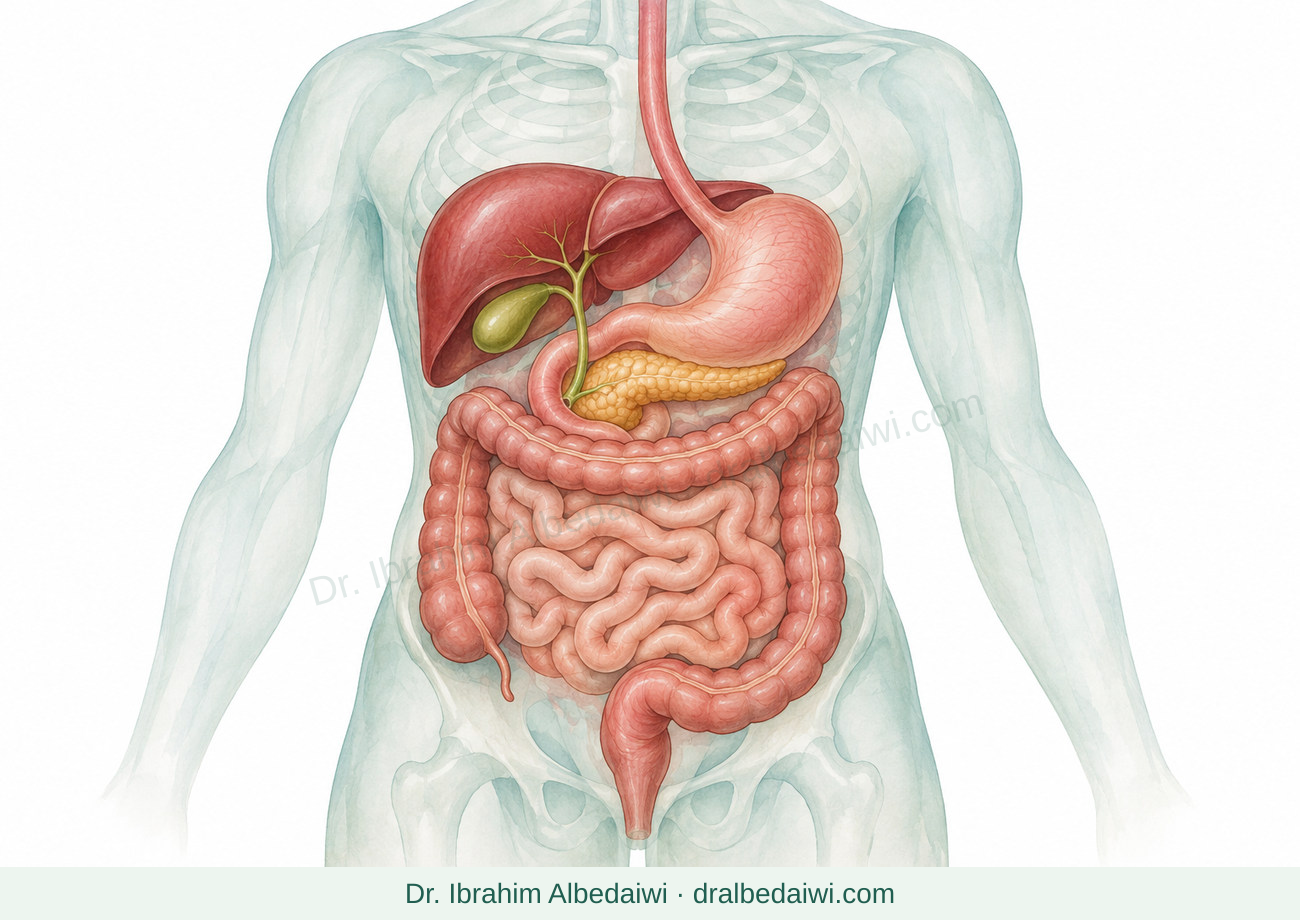
- IBS involves altered gut sensitivity and communication between the gut and brain. It is not the same as chronic inflammatory bowel disease. Medicines aim to make daily life easier; steroids and mesalazine are not IBS treatments. Food changes, movement, sleep, and appropriate psychological support remain part of the plan.
- Your pattern can change between constipation and diarrhea. Treatment should change with it. Discuss the expected benefit, side effects, cost, and local availability rather than repeatedly adding medicines without review.
Treatment starts with the main symptom
Mostly constipation
Improve stool softness and frequency, while also assessing pain.
Mostly diarrhea
Reduce loose stools and urgency; assess the cause of new changes.
Pain and gut sensitivity
Low-dose medicines and gut–brain therapies may help.
This is an explanation, not a prescription. IBS patterns can change and treatment needs review.
© 2026 Dr. Ibrahim Albedaiwi · Patient GuideWhen constipation dominates (IBS-C)
- Soluble fiber such as psyllium/ispaghula may help. Increase it gradually with suitable fluid intake to limit bloating. Bran can aggravate symptoms in some people.
- PEG/macrogol softens stool and improves bowel frequency, but usually does little for IBS pain or bloating. A bowel improvement does not mean every IBS symptom should disappear.
- If symptoms remain troublesome, a clinician may choose linaclotide. It increases bowel fluid and can improve both constipation and pain. Alvotay is a registered Saudi product. Dose depends on the indication, and diarrhea is an important adverse effect. See the linked medicine card.
- International guidelines also include tenapanor (Ibsrela), plecanatide and lubiprostone (Amitiza). They increase bowel water or fluid through different mechanisms. The US lubiprostone IBS-C indication is for adult women. Some of these medicines may not be available locally; your doctor and pharmacist will check suitability and availability before prescribing.
When diarrhea dominates (IBS-D)
- Loperamide can reduce loose stools and urgency; it does not reliably treat overall IBS pain. Follow your individual plan and avoid continuing into constipation. New bloody diarrhea or fever needs assessment.
- Rifaximin is a guideline-supported, limited-course option for selected adults with IBS-D. It can improve overall symptoms, but benefit does not prove SIBO. Diagnosed SIBO needs a separate treatment plan and attention to its cause. Do not repeat antibiotics yourself; see the rifaximin card.
- Eluxadoline (Viberzi) is an option for selected IBS-D patients, but is unsuitable without a gallbladder, with pancreatitis history, duct obstruction, substantial alcohol use or severe liver impairment. Eluxadoline is also unsuitable with a history of chronic or severe constipation, or known or suspected bowel obstruction. It is registered in Saudi Arabia but has an official supply-shortage signal; confirm access before relying on it. Cholestyramine may help bile-acid diarrhea, a different diagnosis, rather than routine IBS.
- A specialist may select ondansetron for some people with diarrhea and urgency. It is an anti-nausea medicine used off-label for IBS, not routine first-line treatment. Evidence is stronger for stool consistency and urgency than pain. Constipation and heart-rhythm effects matter: medicines, electrolytes and risk factors need review. Do not copy an anti-nausea dose into an IBS plan.
For cramps and persistent gut pain
- Your clinician may suggest a trial of an antispasmodic, such as mebeverine or hyoscine, for cramps. Benefit varies between people and does not reliably extend to all IBS symptoms. Agree a trial period and continue only if helpful without troublesome adverse effects.
- Enteric-coated peppermint oil may ease cramps and bloating, but can worsen heartburn or reflux. Ask a pharmacist which preparation is appropriate.
- Low-dose amitriptyline may reduce gut sensitivity and pain, particularly with diarrhea, even without depression. Guidelines support clinician-supervised use, but IBS is outside the local product’s approved indications. Alatript 10 mg is registered in Saudi Arabia. Sleepiness, dry mouth and constipation can occur; see the medicine card for use and follow-up.
- Medicines such as SSRIs are not usual treatments for IBS itself; a clinician may choose one for coexisting depression or anxiety. Gut-directed CBT or hypnotherapy can help relieve symptoms. Mental-health follow-up can be helpful when needed: the symptoms are real, and gut-brain communication affects their severity.
Make the plan safe and measurable
- Record stool consistency, pain, and everyday activities. Agree when to adjust, stop, or review a trial; do not use one universal dose or keep escalating an ineffective treatment.
- Ask for a medicine review in pregnancy, while breastfeeding, for children, and when taking several medicines. Adult treatment choices cannot simply be copied for a child.
Registration does not guarantee pharmacy stock
- Records and references were checked on 10 November 2026. Registration does not establish stock of every strength or pack, or approval for every use. Your clinician and pharmacist should confirm the local leaflet, stock and appropriate alternatives before treatment.
When to get help
Seek urgent care for black tarry stool, substantial bleeding, severe worsening pain, fainting, or dehydration. Do not assume these are IBS.
Arrange prompt reassessment for unexplained weight loss, persistent fever, new bleeding, or persistent nighttime symptoms, especially diarrhea waking you from sleep. Review treatment if symptoms change or the agreed trial does not help.
Guides for your care journey
Read the related guides together:
Related guides
Low-dose amitriptyline for IBS
Constipation, difficult evacuation and bowel leakage
PEG / macrogol for constipation
Sources
NIDDK: Treatment for irritable bowel syndrome
NIDDK: Diagnosis and warning signs
ACG: Clinical guideline (2021)
NICE CG61: Symptom-directed treatment
AGA: Medicines for IBS with constipation (2022)
AGA: Medicines for IBS with diarrhea (2022)
SFDA: registered medicines currently unavailable, eluxadoline row
SFDA: Alatript 10 mg approval and approved indications
TRITON primary trial and pooled analysis (2023)