

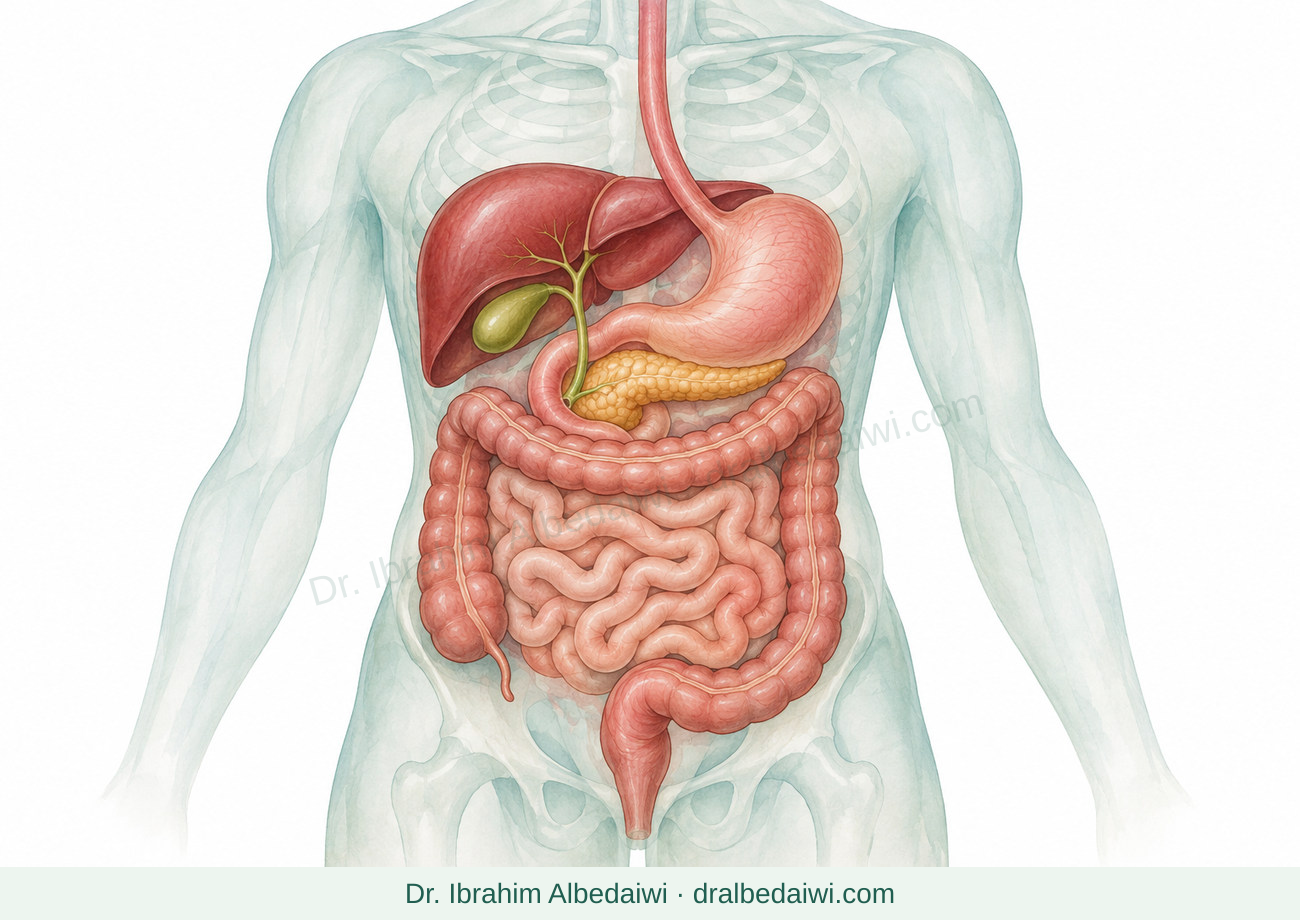

Barrett’s esophagus
Content date: 10 November 2026
Barrett’s is a change in the esophageal lining, not cancer. Most people do not develop cancer, but biopsy findings guide monitoring or treatment.
Your next step
Bring your endoscopy and biopsy reports, record your next appointment, and list your acid medicines and how you take them.
Get urgent help: Food stuck or liquids unable to pass, vomiting blood, black tarry stool, or new severe chest pain: seek urgent care.
What changes in the esophagus?
- The esophagus carries food to the stomach. In Barrett’s, cells lining part of this tube become more like intestinal cells. It is often associated with longstanding reflux but may be found without obvious heartburn. Most people with reflux do not develop Barrett’s.
- Further abnormal cell changes, called dysplasia, can sometimes develop before cancer. Risk depends on whether dysplasia is present, its grade and the length of affected tissue. Symptoms alone cannot determine the follow-up plan.
Confirming the diagnosis
- Upper endoscopy examines the lining and obtains biopsies: small tissue samples examined under a microscope. The segment length and biopsy result matter. Redness or a slightly irregular junction between the esophagus and stomach does not automatically confirm Barrett’s.
- Dysplasia should be reviewed by an expert gastrointestinal pathologist before treatment decisions. Inflammation can make findings uncertain, sometimes requiring acid treatment followed by reassessment according to the plan.
Monitoring or endoscopic treatment?
- Without dysplasia, endoscopy and biopsies are usually used for surveillance; tissue is not routinely removed. Many patients have examinations roughly every three to five years, depending on segment length, findings, general health and the quality of the previous examination.
- Confirmed dysplasia or selected very early superficial cancers may be treated by removing or ablating abnormal tissue endoscopically at a specialist center. The grade determines urgency and options; a diagnosis does not automatically mean surgery.
Acid medicines and daily habits
- Your doctor may recommend a daily proton pump inhibitor, or acid-reducing medicine, even with little heartburn. Follow your medicine’s timing and dose rather than stopping solely because symptoms improve.
- Stopping smoking, addressing excess weight and adjusting meals and sleep support health and reflux control. Reflux surgery does not automatically replace Barrett’s surveillance or guarantee cancer prevention.
Make follow-up clear
- Keep the endoscopy and biopsy reports. Ask whether there is dysplasia and when the next examination is due. Very short changes under one centimeter may not need Barrett’s surveillance; your doctor determines whether that applies to your findings.
- Changes may recur after successful endoscopic treatment, so follow-up remains important. New swallowing difficulty, weight loss or bleeding needs assessment without waiting for the routine surveillance appointment.
When to get help
Food stuck or liquids unable to pass, vomiting blood, black tarry stool, or new severe chest pain: seek urgent care.
Increasing swallowing difficulty, unintentional weight loss, or a biopsy showing dysplasia without a clear follow-up plan.
Related guides
Gastroesophageal reflux disease