

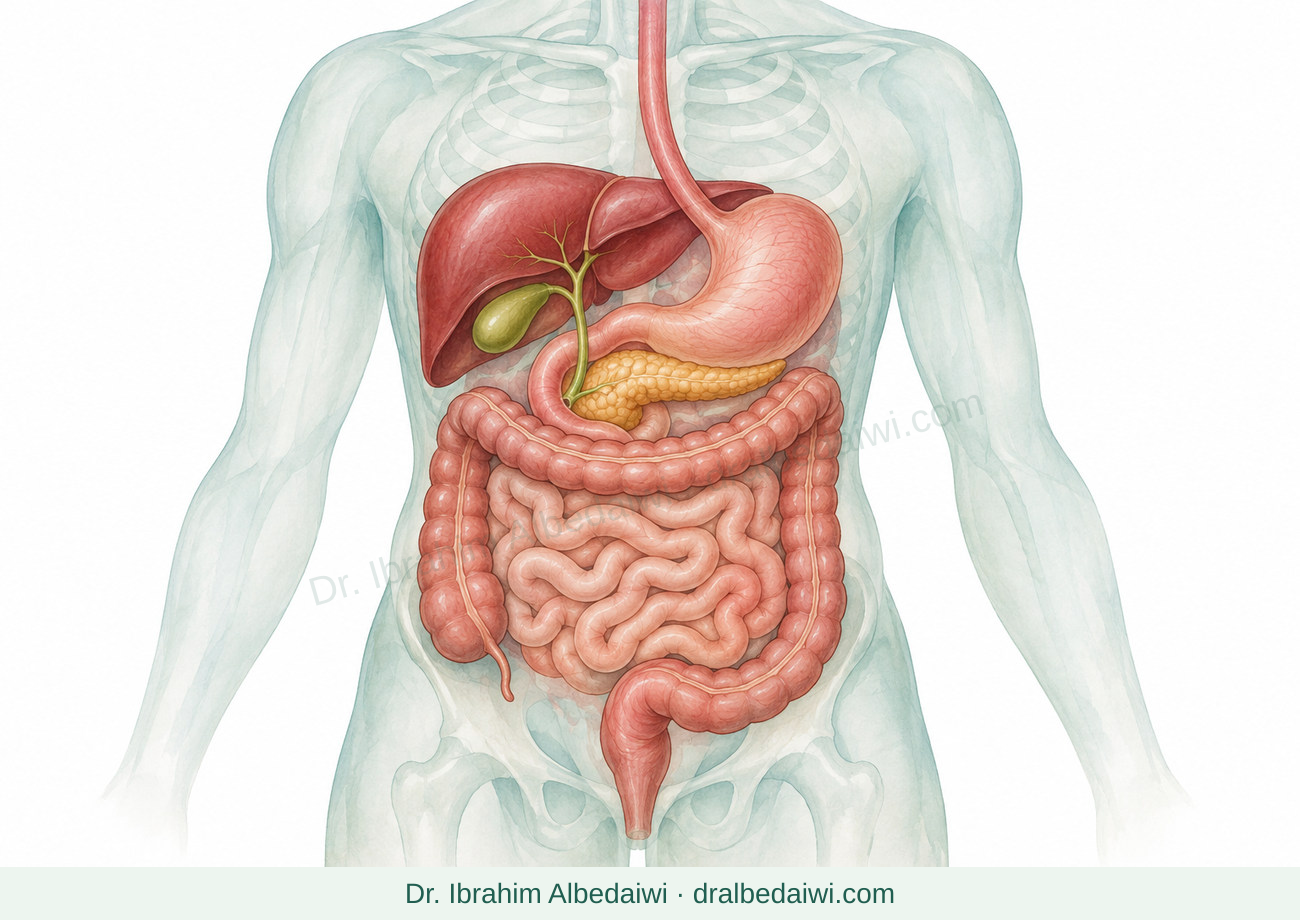

Achalasia: a swallowing movement disorder
Content date: 10 November 2026
Achalasia affects esophageal movement and makes it difficult for food to enter the stomach. Effective treatments exist, but not all swallowing difficulty or regurgitation is achalasia.
Your next step
Record what is difficult to swallow and bring endoscopy, manometry and previous treatment reports.
Get urgent help: Food stuck, inability to swallow saliva or liquids, breathing difficulty or new severe chest pain. After a procedure, severe pain, fever or breathlessness also needs urgent assessment.
What happens during swallowing?
- Normally, coordinated contractions move food down the esophagus while the muscle at the stomach entrance relaxes. In achalasia, the nerves controlling these actions are affected, contractions become abnormal and the lower muscle does not relax properly.
- Solids and liquids may become difficult to swallow. Undigested food may return to the mouth, with nighttime coughing, weight loss or chest discomfort. This can resemble reflux, but excess acid is not the underlying problem and symptoms alone cannot diagnose it.
Confirming the diagnosis
- Upper endoscopy helps exclude a narrowing, tumor or another condition resembling achalasia. Early endoscopy findings may be subtle; a previous normal examination does not end the assessment if swallowing difficulty continues.
- High-resolution esophageal manometry confirms the diagnosis and identifies its type. A timed barium swallow can assess esophageal emptying. The test sequence depends on the case; acid monitoring and manometry measure different things.
Treatment options
- Treatment helps food cross the lower esophageal muscle but does not restore damaged nerves to normal. Options include specialized pneumatic balloon dilation, surgical Heller myotomy, or peroral endoscopic myotomy, called POEM.
- Choice depends on the movement pattern, overall health, center expertise and your preferences. Botulinum toxin injections may suit people unable to tolerate more durable procedures. Discuss recurrence and possible further treatment rather than expecting identical results for everyone.
Benefits, risks and follow-up
- Bleeding, a tear or perforation, and other complications can occur depending on the procedure. Unusual symptoms afterward need assessment. Acid reflux may increase, particularly after POEM; acid medicines and follow-up tests may be needed even when swallowing improves.
- Returning swallowing difficulty does not automatically mean treatment failure. Recurrent functional obstruction, inflammation or a reflux-related narrowing may be responsible. Reassessment guides further treatment. Follow your center’s specific fasting and food instructions before and after the procedure.
Eating while treatment is arranged
- If swallowing is safe, choose small meals and soft, moist foods you tolerate, chew slowly and sit upright. Avoid lying down after eating. Seek nutritional support if weight or food intake falls.
- If food becomes stuck or liquids will not pass, do not force it down with more food or water; seek emergency care. Repeated coughing or choking during meals needs assessment, not continued eating despite symptoms.
When to get help
Food stuck, inability to swallow saliva or liquids, breathing difficulty or new severe chest pain. After a procedure, severe pain, fever or breathlessness also needs urgent assessment.
Worsening swallowing, repeated nighttime cough or choking, weight loss or symptoms returning after treatment.
Related guides
Difficulty swallowing and food getting stuck