

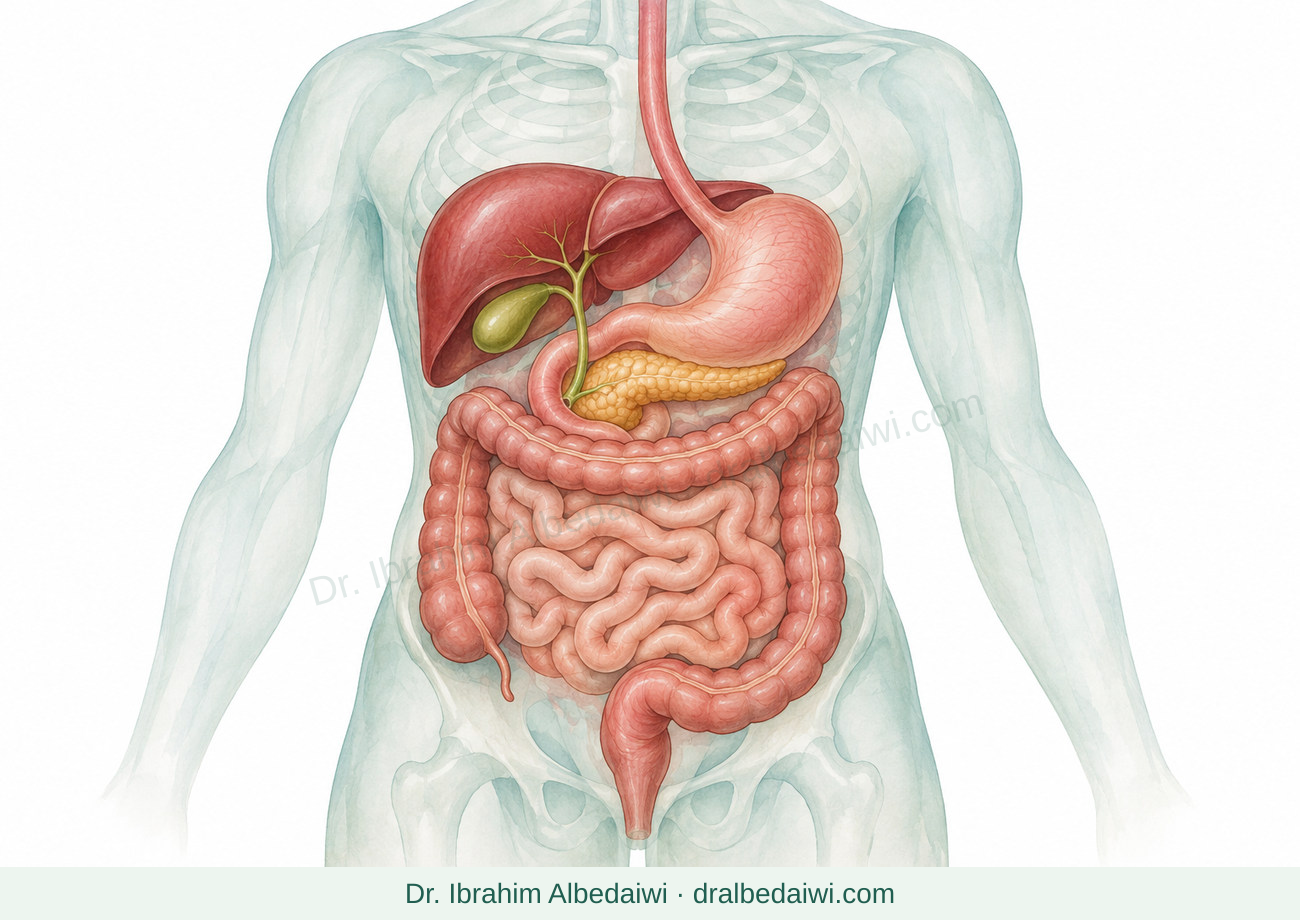

Gastroenteritis and food poisoning
Content date: 10 November 2026
Sudden diarrhea or vomiting may follow infection or contaminated food. Many cases improve within days. Replacing fluids and recognizing dehydration and warning signs are priorities. This guide is for adults; children need age-specific advice.
Your next step
Start fluid replacement, monitor urine and ability to drink, and record symptom onset, medicines and meals shared with others.
Get urgent help: Fainting, confusion, very little urine, inability to keep fluids down, severe or worsening abdominal pain, significant bleeding or black stools, or swallowing/breathing difficulty or muscle weakness after suspect food: seek emergency care immediately.
Are gastroenteritis and food poisoning the same?
- Gastroenteritis affects the digestive tract, causing diarrhea, cramps, nausea or vomiting, sometimes with fever. Infection can spread between people or through food and water. Food poisoning follows food or drink contaminated with microbes or toxins.
- Symptoms may begin hours or days later; the last meal is not necessarily responsible. Not all diarrhea is an infection, and gastroenteritis differs from H. pylori. Severe pain, bleeding or persistent symptoms need assessment for other causes.
Replace fluids and salts first
- Take frequent small sips, especially when vomiting. Oral rehydration solution (ORS) replaces water and salts in appropriate proportions, particularly with repeated diarrhea or dehydration. Soft drinks and very sugary juices are not suitable substitutes.
- Use ready-made ORS as directed, or dissolve the whole sachet in exactly the safe-water volume on its label. Sachet sizes differ: do not assume every packet needs one liter. Do not add sugar or salt, or mix with milk or juice. Follow storage and use-by instructions.
Eating during recovery
- Fasting or a highly restrictive diet is unnecessary. As nausea settles and appetite returns, start small portions and return to usual foods as tolerated, such as rice, potatoes, bread, soup and thoroughly cooked food.
- Temporarily reduce foods that worsen symptoms, such as fried food, caffeine and very sweet drinks. Milk may be harder to digest after infection; reduce it if it worsens diarrhea or bloating rather than permanently excluding all dairy.
Antibiotics and medicines to stop diarrhea
- Antibiotics are not routine treatment, do not help viral infections and may harm some infections. A clinician selects them when appropriate. Do not use leftover antibiotics or another person’s prescription.
- Loperamide may suit some adults with short-lived watery diarrhea after checking suitability; it does not replace fluids. Avoid it with bloody stool, fever, severe swelling or pain, suspected active colitis or C. difficile infection, and seek assessment.
When are tests needed?
- Mild, short illnesses usually need neither stool testing nor endoscopy. Tests may be appropriate with blood, high fever, dehydration, persistent illness, weakened immunity or several people becoming ill after a shared meal.
- Mention travel, shared food, sick contacts, recent antibiotics and hospital stays. With Crohn’s or ulcerative colitis, do not assume every episode is a flare; infection may need excluding before treatment changes.
Protecting others and preventing recurrence
- Wash hands with soap and water after the toilet and before food; sanitizer alone works less well against norovirus. Clean vomit and diarrhea with a suitable disinfectant according to its label, without mixing cleaning products. Avoid preparing food for others until 48 hours after symptoms stop.
- Separate raw and ready-to-eat food, cook meat thoroughly and avoid unpasteurized milk. Refrigerate perishable food within two hours, or one hour above 32°C. Smell alone cannot establish safety.
Chronic illness or transplantation
- Seek advice early during pregnancy, older age, kidney disease, cirrhosis, weakened immunity or after transplantation. Fluid replacement and testing may need tailoring, especially with an existing fluid or salt restriction.
- Do not stop transplant medicines or randomly alter diabetes medicines or diuretics. If vomiting prevents keeping medicines or fluids down, contact the team the same day. Deterioration needs emergency care; do not wait for messages.
When to get help
Fainting, confusion, very little urine, inability to keep fluids down, severe or worsening abdominal pain, significant bleeding or black stools, or swallowing/breathing difficulty or muscle weakness after suspect food: seek emergency care immediately.
Bloody diarrhea, high fever or dehydration needs same-day assessment. Seek review if improvement has not begun within two days or diarrhea lasts over three days. People at higher risk should contact the team earlier.