

Everyday eating with reflux
Content date: 14 November 2026
Meal timing and size matter. Do not eliminate many foods at once; reduce what triggers your own symptoms and then assess the result.
| Situation | Try this | Watch for |
|---|---|---|
| A large kabsa or mandi meal | A smaller portion, less fat and slower chewing | Becoming very full and then lying down |
| Shawarma or fried food | A smaller grilled option with a lighter sauce | Fat and spicy sauces if they trigger heartburn |
| Frequent coffee or tea | Reduce the amount or strength if you notice a link | There is no need to stop them if they do not cause symptoms |
| Tomatoes, citrus fruit or mint | Try reducing one item, then reassess | Triggers are individual, not a universal banned-food list |
| Suhoor or a late meal | A lighter meal and about three hours before lying down | Discuss sleep and medicine timing during Ramadan |
A simple trial diary
Record food, portions, bedtime and heartburn severity for one or two weeks. If nothing changes, do not continue excluding food without benefit. Review medicine timing with your team.
| Day / meal | Possible trigger | What changed? Did symptoms improve? |
|---|---|---|
| ........................ | ........................ | ................................ |
| ........................ | ........................ | ................................ |
| ........................ | ........................ | ................................ |
If you are overweight, gradual weight loss helps. For night-time symptoms, discuss raising the head of the bed or using a wedge that supports the upper body, not just the neck.
Swallowing difficulty or weight loss needs review. New chest pain with breathlessness or sweating, or bleeding, needs urgent assessment.
Raising the head of the bed for night-time symptoms
This is particularly helpful for heartburn or fluid coming back up at night or when lying down. Raising the chest and head above the abdomen lets gravity help reduce reflux into the esophagus. It supports treatment rather than replacing it.
Raise the head end of the bed about 15–20 cm using purpose-made stable bed risers under the legs at that end, or use an adjustable bed. A long wedge pillow that supports the back, shoulders and head together on a gradual slope is another option.
Stacking ordinary pillows under the head alone does not produce the same incline and may bend the neck or increase pressure on the abdomen. Ensure the bed is stable and your back comfortable; get help to set it up safely. Continue leaving about three hours between the last meal and lying down.
Smoking and reflux
Smoking can weaken the muscular barrier between stomach and esophagus, making acid reflux easier. Stopping is important for reducing reflux and protecting health, particularly if symptoms persist despite medicine.
The goal is to stop completely. If that is difficult now, reduce smoking within a clear plan to quit and seek support from your doctor or a smoking cessation clinic to choose suitable aids. Cutting down is a transitional step and does not remove the harm.
Coffee and fasting
If coffee triggers your symptoms, avoid it on an empty stomach or as your first drink after fasting. If you choose to drink it, try a small amount after a light meal; this does not guarantee prevention of reflux. Reduce or avoid it if symptoms persist.
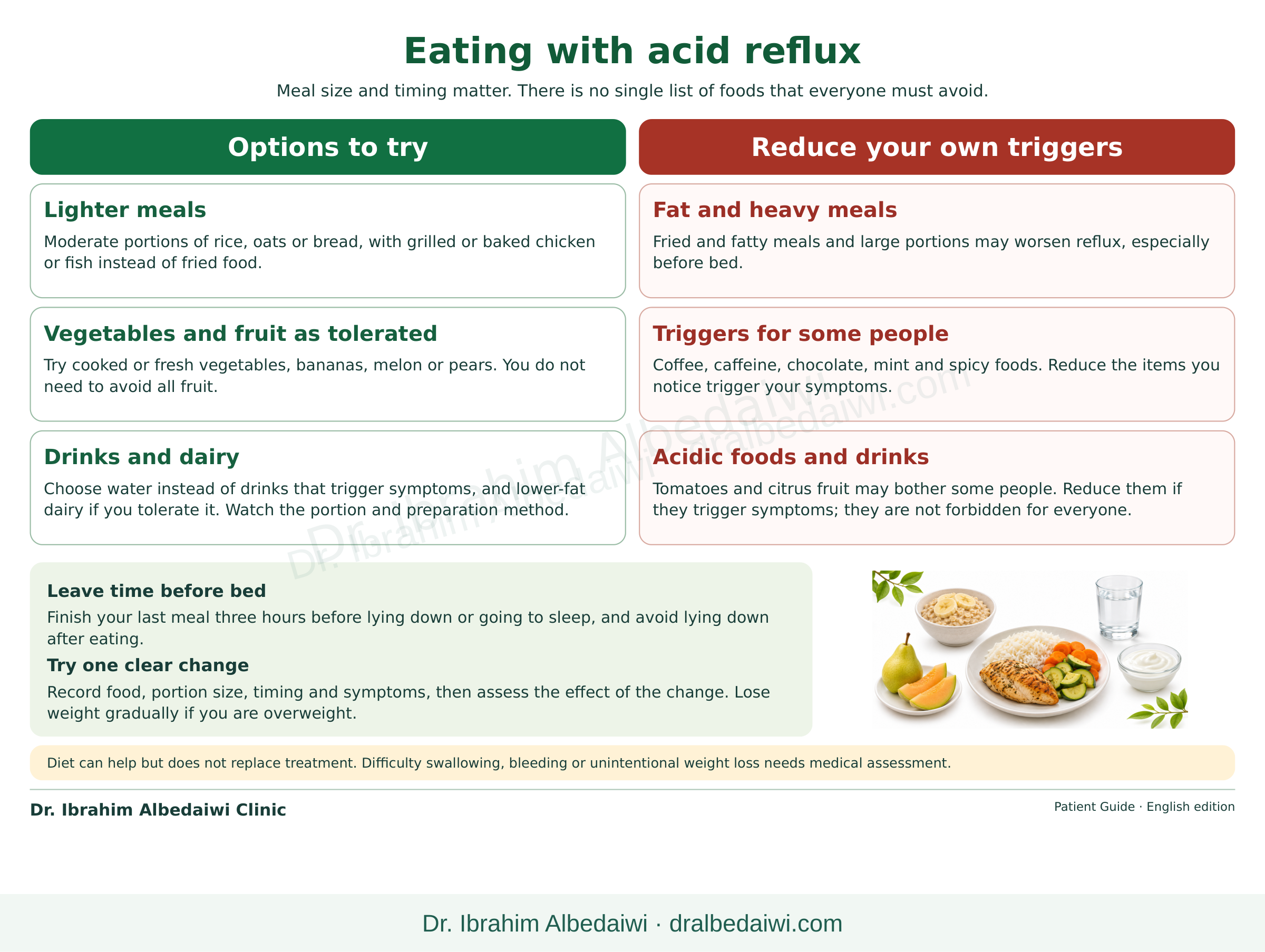
Eating with acid reflux
Meal size and timing matter. There is no single list of foods that everyone must avoid.
Meal size and timing
Try smaller meals and leave about three hours between the last meal and lying down.
Identify your own triggers
Reduce foods that repeatedly cause your symptoms; there is no identical banned list for everyone.
Options to try
Lighter meals
Moderate portions of rice, oats or bread, with grilled or baked chicken or fish instead of fried food.
Vegetables and fruit as tolerated
Try cooked or fresh vegetables, bananas, melon or pears. You do not need to avoid all fruit.
Drinks and dairy
Choose water instead of drinks that trigger symptoms, and lower-fat dairy if you tolerate it. Watch the portion and preparation method.
Reduce your own triggers
Fat and heavy meals
Fried and fatty meals and large portions may worsen reflux, especially before bed.
Triggers for some people
Coffee, caffeine, chocolate, mint and spicy foods. Reduce the items you notice trigger your symptoms.
Acidic foods and drinks
Tomatoes and citrus fruit may bother some people. Reduce them if they trigger symptoms; they are not forbidden for everyone.
Leave time before bed
Finish your last meal three hours before lying down or going to sleep, and avoid lying down after eating.
Try one clear change
Record food, portion size, timing and symptoms, then assess the effect of the change. Lose weight gradually if you are overweight.
Diet can help but does not replace treatment. Difficulty swallowing, bleeding or unintentional weight loss needs medical assessment.
Guides for your care journey
Read the related guides together: