

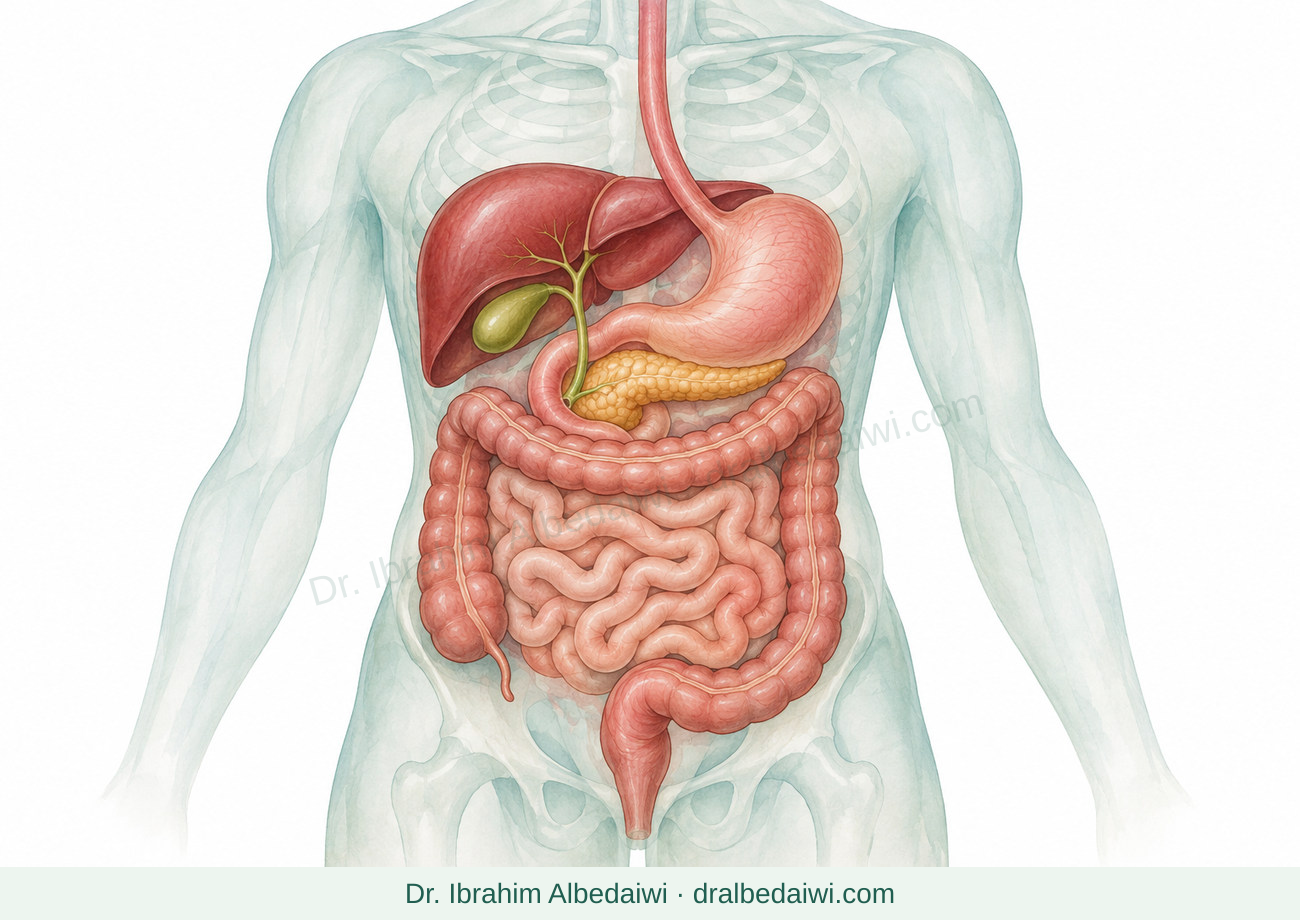

Eating after stomach surgery: dumping syndrome
Content date: 14 November 2026
Rapid food passage after stomach surgery can cause symptoms after eating; meal size, composition and drink timing can help.
Your next step
Try a smaller meal, reduce sugary drinks and record when symptoms occur after eating.
Get urgent help: Collapse, seizure, severe confusion, inability to swallow or new severe pain.

Symptom timing matters
Cramping, diarrhoea, palpitations or dizziness may occur soon after eating. Shaking, sweating and weakness 1–3 hours later may relate to low glucose. Symptoms alone do not confirm the diagnosis.
Smaller, balanced meals
Spread food across small meals and eat slowly. Include protein and choose carbohydrates and fibre compatible with your tolerance and surgical plan. Reduce juice, sweetened drinks and concentrated sweets.
Separate drinks from meals
Delaying drinks until at least 30 minutes after a meal may help. Drink regularly between meals to stay hydrated within your care plan. Do not automatically exclude dairy; assess tolerance.
If low glucose is suspected
Agree a plan for checking and treating low glucose, especially if you use diabetes medicines. Treat a low-glucose episode promptly according to your rescue plan; do not delay treatment because of routine advice to reduce sugar. Do not drive while dizzy or confused. Collapse, seizure or inability to swallow is an emergency; do not give food or drink to an unconscious person.
Practical choices
| Situation | Practical choice |
|---|---|
| Size | Small meals rather than large ones. |
| Contents | Include protein; reduce rapidly absorbed sugars. |
| Drinks | At least 30 minutes after meals; maintain hydration. |
When to get help
Collapse, seizure, severe confusion, inability to swallow or new severe pain.
Recurrent dizziness or suspected low glucose, weight loss or symptoms despite dietary changes.
Related guides
Gastroparesis: delayed stomach emptying