

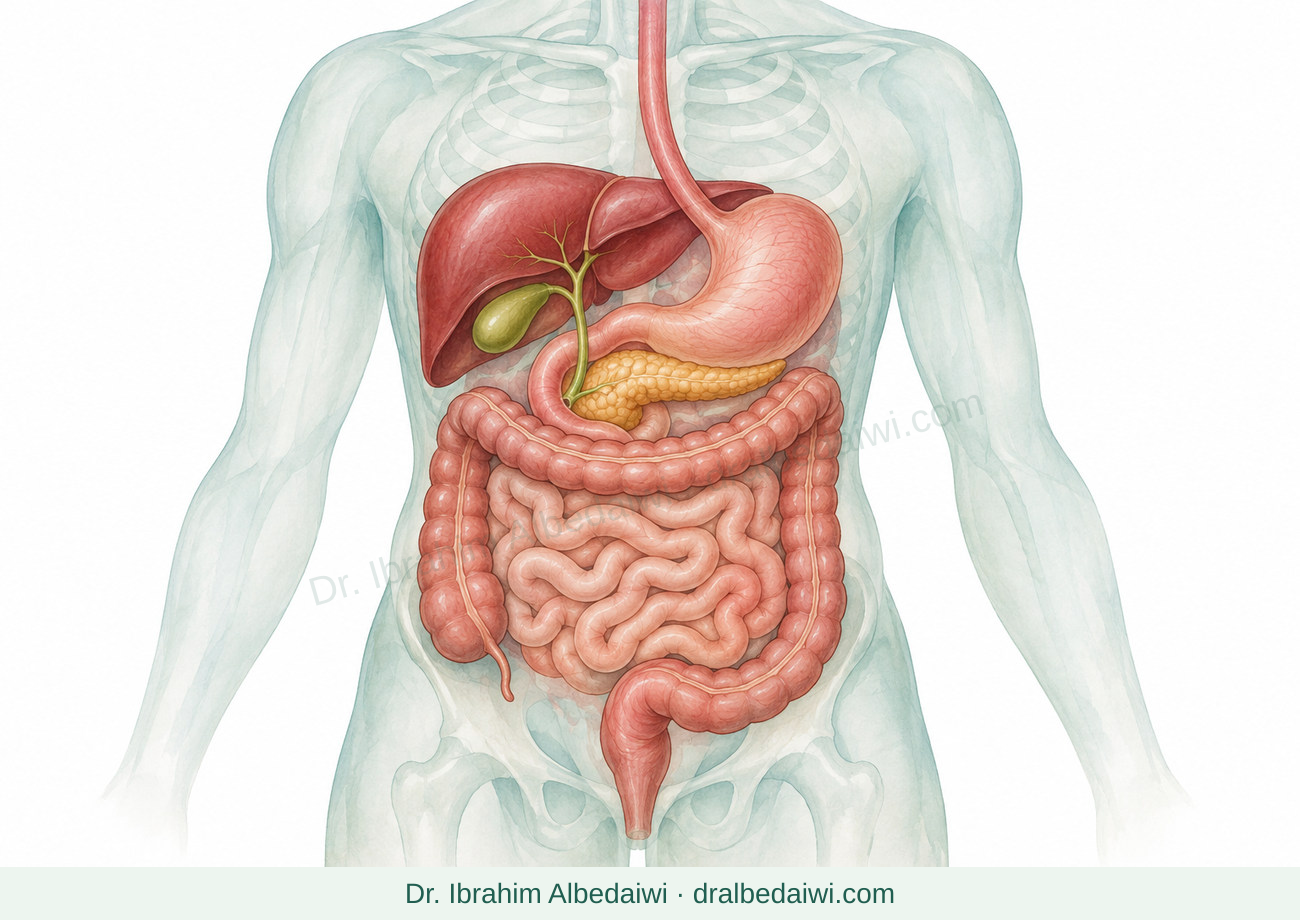

Stoma care and when to seek help
Content date: 14 November 2026
A stoma is a surgically created opening that lets bowel contents enter a pouch. Care depends on its type, recovery stage and your individual plan.
Your next step
Record your stoma type, fluid plan and the output changes your team wants reported.
Get urgent help: No output with severe cramps, vomiting or swelling; an unusually dark stoma; heavy bleeding; fainting or severe dehydration: emergency care.
Ileostomy or colostomy?
- A stoma can be temporary or permanent. Ileostomy output is generally more liquid and can increase water and salt losses. It differs from an internal pouch after UC surgery. Ask for your operation name and stoma-nurse follow-up plan.
Practical daily care
- Learn pouch emptying, changes and gentle skin cleaning/drying with your stoma nurse. The barrier must fit to protect skin; repeated leakage, soreness or broken skin needs a fit review rather than simply being covered.
- Observe the stoma, surrounding skin, output and urine. Minor contact bleeding can occur, but heavy or persistent bleeding is not normal. Keep spare supplies, ordering details and your team’s contact information.
Food and fluids
- Follow the recovery diet, then reintroduce foods gradually as tolerated. Not every stoma requires a permanent low-fibre diet. Chew well and keep a food/symptom record if useful.
- Markedly increased output, reduced urine or dizziness warrants contact. A high-output stoma may require a specific oral rehydration and salt/fluid plan; do not simply drink unlimited plain water, restrict fluids or add salt without advice.
Returning to daily life
- Many people return to work, travel and activity. Discuss lifting, parastomal hernia, swimming and intimacy with your team. Rectal mucus can occur when the lower bowel remains, but new pain or bleeding needs assessment.
Stoma: what should I watch?
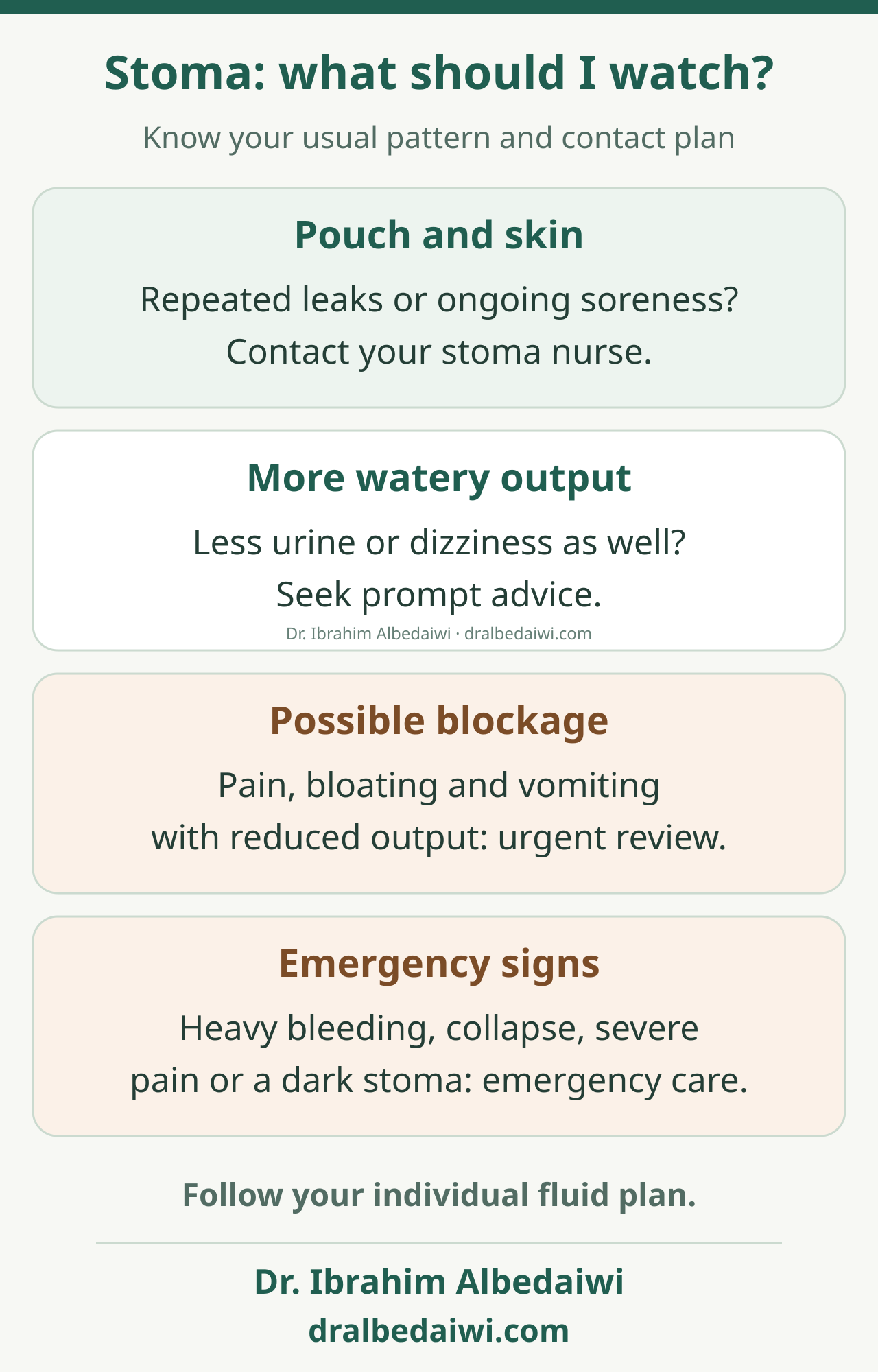
Read the illustration as text
Know your usual pattern and contact plan
- Pouch and skin: Repeated leaks or ongoing soreness? Contact your stoma nurse.
- More watery output: Less urine or dizziness as well? Seek prompt advice.
- Possible blockage: Pain, bloating and vomiting with reduced output: urgent review.
- Emergency signs: Heavy bleeding, collapse, severe pain or a dark stoma: emergency care.
Follow your individual fluid plan.
When to get help
No output with severe cramps, vomiting or swelling; an unusually dark stoma; heavy bleeding; fainting or severe dehydration: emergency care.
Repeated leakage, damaged skin, markedly changed output or difficulty obtaining supplies.
Guides for your care journey
Read the related guides together: