

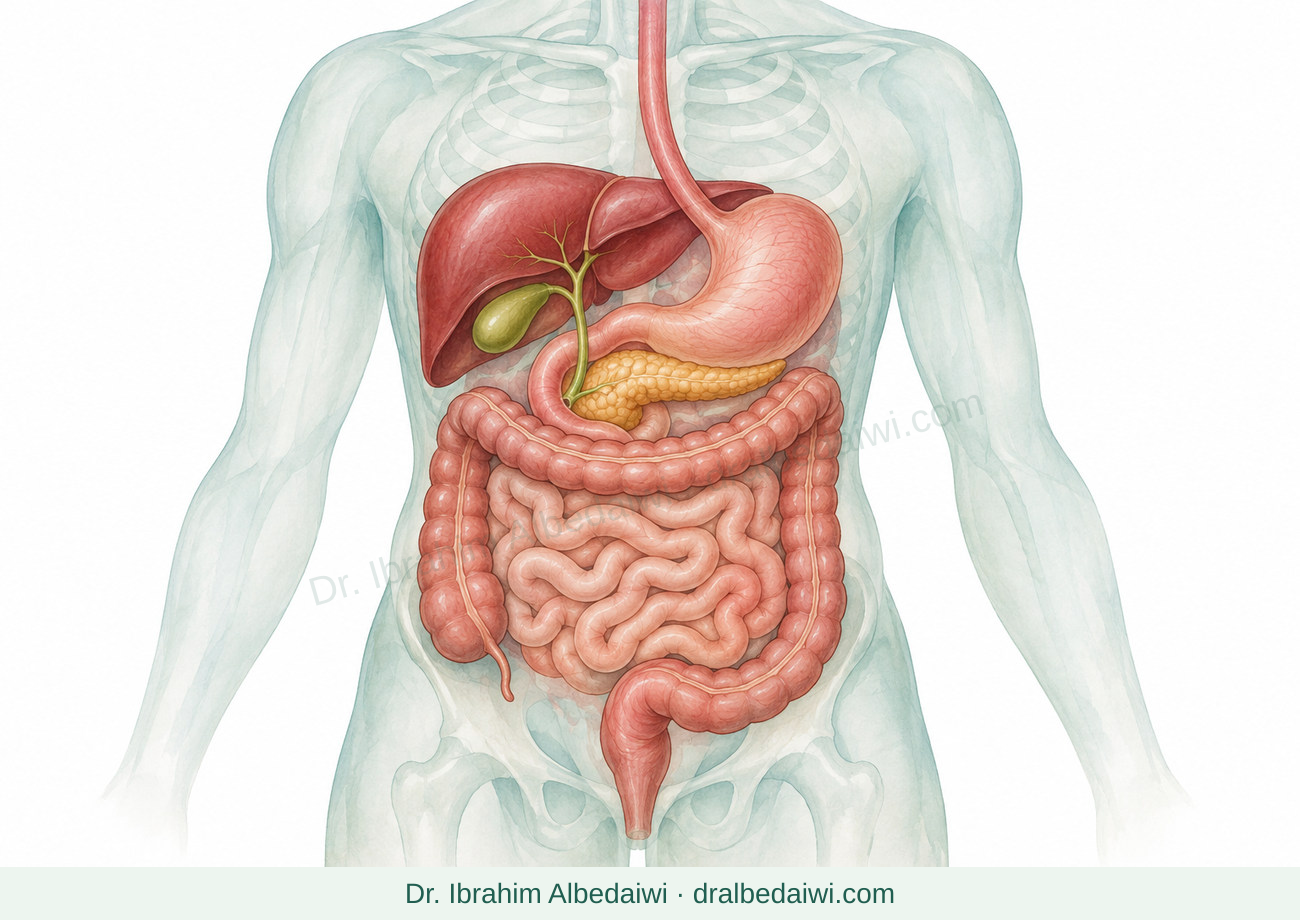

Colon and rectal cancer
Content date: 14 November 2026
Treatment can aim for cure in many cases. The plan depends on the tumor’s location, stage and features. Symptoms or a single blood test cannot establish the diagnosis.
Your next step
Ask about tumor location, stage, tissue tests and how treatment may affect eating, bowel function and daily life.
Get urgent help: Severe abdominal pain and swelling with vomiting and inability to pass gas or stool, heavy bleeding, fainting or sudden severe pain need urgent care. Follow emergency instructions for fever during cancer treatment. During chemotherapy, a temperature of 38°C or higher requires immediate contact with the oncology team or emergency care; do not wait for a message reply.
Understanding the disease
- The colon is part of the large bowel and ends in the rectum, which stores stool. Cancer develops when cells in the lining grow uncontrollably. Some cancers develop from polyps that change over time, but most polyps are not cancer.
- Cancer may extend into the bowel wall, lymph nodes or other organs. Location matters: rectal treatment can differ from colon treatment because of nearby pelvic organs and muscles controlling bowel movements.
When to seek assessment
- Possible symptoms include blood in stool, a persistent bowel habit change, abdominal pain, iron-deficiency anemia or unintentional weight loss. Other conditions cause these symptoms, but do not automatically attribute bleeding to hemorrhoids without appropriate assessment.
- Screening may detect disease before symptoms. A positive stool screening test does not establish cancer, but needs further assessment, usually colonoscopy. Symptoms need diagnostic assessment even when routine screening is not due.
Diagnosis and staging
- Colonoscopy allows biopsy, identifies the tumor location and examines the remaining colon when possible. The biopsy establishes the cell type. CT scans of the chest, abdomen and pelvis may be needed; pelvic MRI commonly helps plan rectal cancer treatment.
- CEA blood testing may help follow-up, but cannot confirm or exclude cancer alone or replace screening. Results are interpreted alongside scans and clinical assessment.
- Ask about tumor testing, including MMR/MSI. These results can guide treatment and whether genetic counseling is needed. An alteration in the tumor is not necessarily inherited.
Choosing treatment
- Specialists review stage, overall health and your priorities. Selected early cancers may need endoscopic removal or surgery; additional medicines may be required. Rectal cancer may need medicines or radiotherapy before surgery. Immunotherapy suits some tumor types.
- When cancer has spread, treatment options remain. Selected limited spread may be suitable for surgery or other local treatment. Ask the team to explain the treatment goal rather than assuming that spread rules out every option.
- A stoma, an opening on the abdomen for stool, may be temporary or permanent depending on surgery. Not everyone needs one. Ask about its likelihood and specialist stoma-nurse support.
Food and everyday life
- Monitor weight and hydration, and request nutrition support for poor intake. Suitable fiber intake varies after surgery or with bowel narrowing; do not automatically increase fiber with pain, swelling or suspected obstruction.
- Report diarrhea, constipation, pain or bowel-control difficulties. Discuss possible sexual and fertility effects of pelvic treatment beforehand. Psychological and symptom support are part of care.
After treatment and family care
- Keep a personalized schedule for colonoscopy, scans and blood tests. Ask about relatives’ assessment with a young diagnosis or concerning family history. Bring biopsy reports and scan images, and keep contact numbers.
When to get help
Severe abdominal pain and swelling with vomiting and inability to pass gas or stool, heavy bleeding, fainting or sudden severe pain need urgent care. Follow emergency instructions for fever during cancer treatment. During chemotherapy, a temperature of 38°C or higher requires immediate contact with the oncology team or emergency care; do not wait for a message reply.
Repeated bleeding, persistent bowel changes, unexplained weight or iron loss, or symptoms limiting eating or activity need prompt review.