

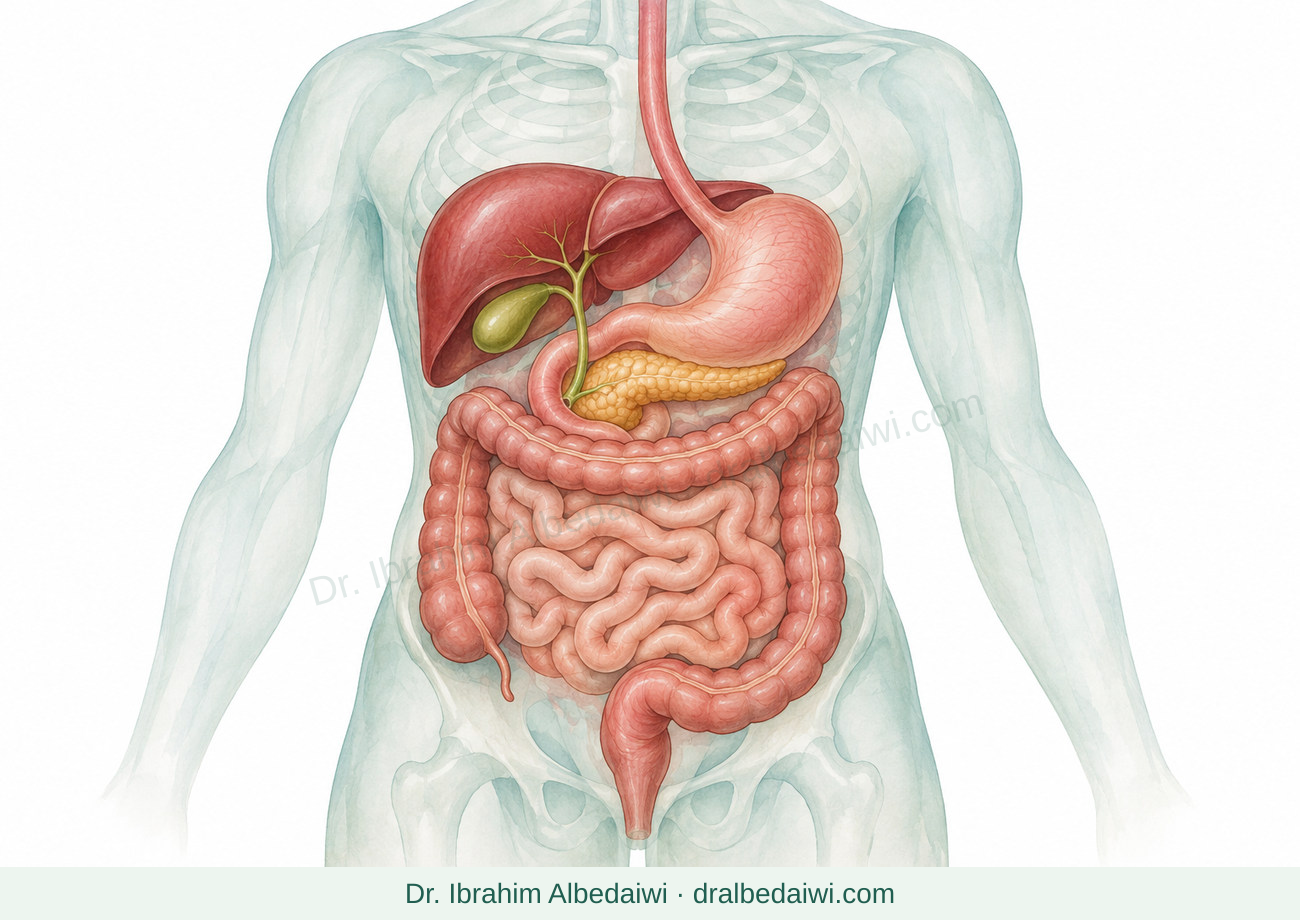

Esophageal cancer: diagnosis, treatment and nutrition
Content date: 15 November 2026
Progressive swallowing difficulty needs prompt assessment but does not necessarily mean cancer. If confirmed, stage, cell type and nutrition help shape treatment.
Your next step
Ask about cell type, stage, treatment goal, nutrition and contact arrangements.
Get urgent help: Persistent food stuck in the esophagus, inability to swallow liquids or saliva, choking or breathing difficulty, vomiting blood or severe dehydration: seek emergency care. During chemotherapy, a temperature of 38°C or higher requires immediate contact with the oncology team or emergency care; do not wait for a message reply. Follow any stricter instructions from your team.
What is esophageal cancer?
- It is malignant growth in the tube carrying food to the stomach. Major types include adenocarcinoma and squamous cell carcinoma. Reflux or Barrett’s esophagus does not itself mean cancer, and no single symptom establishes it.
Symptoms and investigation
- Possible symptoms include difficult or painful swallowing, food regurgitation, weight loss or anaemia. Benign conditions can look similar; temporary relief with acid medicines should not delay assessment.
- Endoscopy examines the esophagus and obtains biopsies. If cancer is found, imaging and sometimes endoscopic ultrasound assess its extent. Not everyone needs every test.
How is treatment chosen?
- Selected very superficial cancers can be treated endoscopically. Others may need surgery with drug treatment or radiotherapy, or chemoradiotherapy without surgery. A specialist team considers stage, general health and your preferences.
- Immune or targeted medicines may suit selected tumors based on their characteristics. Ask whether the goal is cure where possible or disease control and symptom relief. A single prognosis estimate does not apply to everyone.
Swallowing and nutrition during treatment
- Report difficulty with food or liquids early. Texture changes, supplements or tube feeding may be needed; a stent can relieve obstruction in selected cases within the cancer plan. Do not force down stuck food with more food or water.
- Pain and nausea treatment, psychological support and nutrition care start alongside cancer treatment. Palliative care can be provided concurrently; it does not mean treatment must stop.
When to get help
Persistent food stuck in the esophagus, inability to swallow liquids or saliva, choking or breathing difficulty, vomiting blood or severe dehydration: seek emergency care. During chemotherapy, a temperature of 38°C or higher requires immediate contact with the oncology team or emergency care; do not wait for a message reply. Follow any stricter instructions from your team.
New or progressive swallowing difficulty, weight loss or inadequate food/fluid intake.