

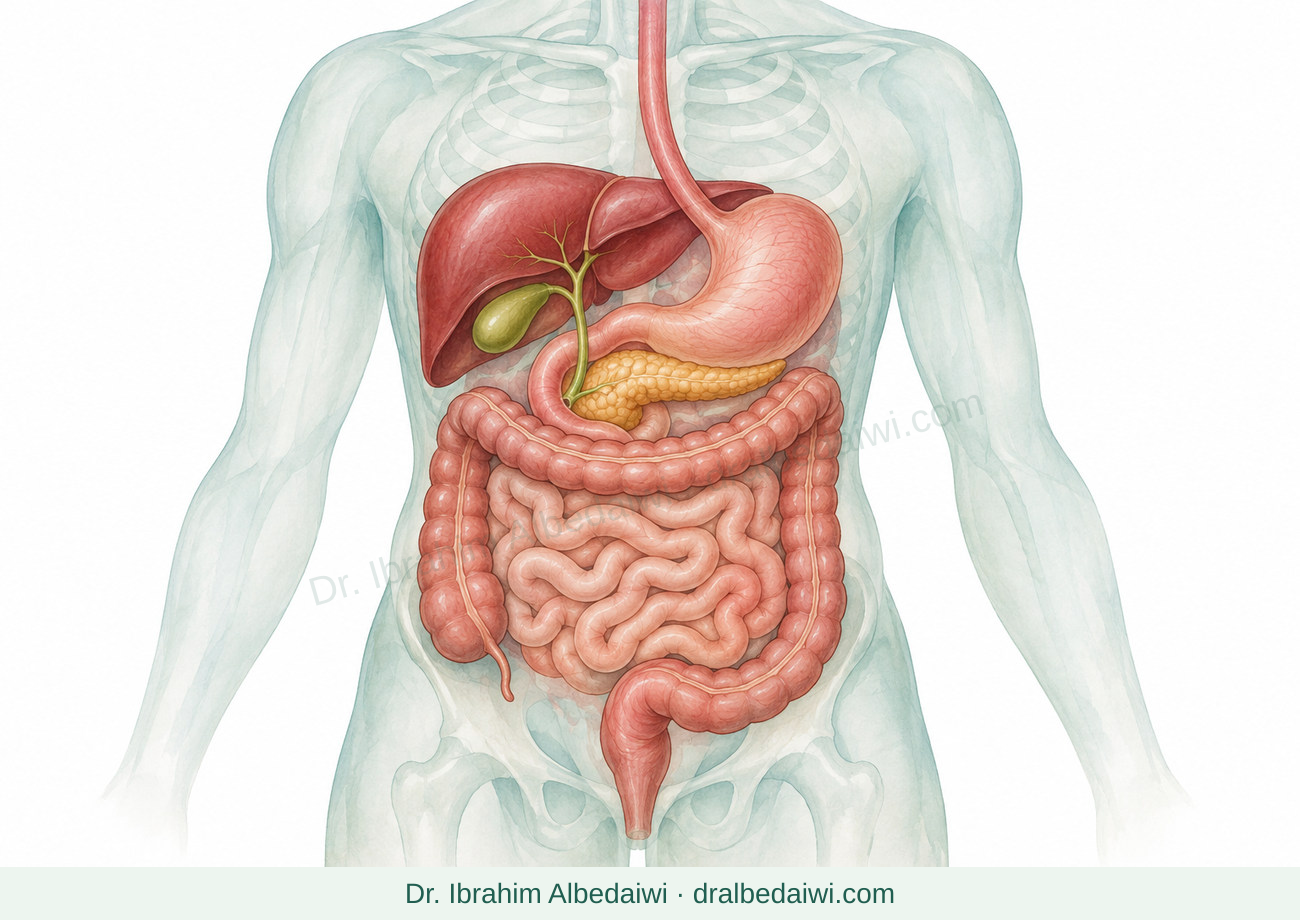

Fatty liver and steatohepatitis
Content date: 14 November 2026
Fat in the liver can improve. What matters most is assessing liver scarring, protecting your heart and managing diabetes—not simply tracking liver enzyme levels.
Your next step
Choose one dietary change and a time to walk, and confirm when your liver scarring assessment is due.
Get urgent help: Vomiting blood, black, tarry stools even without dizziness, new confusion, or severe jaundice with a general deterioration.
What happens inside the liver?
- The liver processes food, stores energy and makes substances your body needs. In fatty liver, more fat than usual builds up inside liver cells. This often happens when the body responds less well to insulin. It may be linked to diabetes, a larger waist and abnormal blood fats, but can also occur at a normal weight.
- Fat accumulation differs from steatohepatitis, where liver cells are also injured and inflamed. Persistent injury may cause scar tissue called fibrosis. Stages F1–F3 describe fibrosis before cirrhosis; F3 is advanced fibrosis. F4 means cirrhosis, with changes to the liver’s structure. Not everyone with liver fat develops these stages.
- Your report may use MASLD, the name for fatty liver associated with metabolic dysfunction. It includes disease with or without steatohepatitis. MASH is the form with inflammation and liver-cell injury. A MASLD label does not rule out inflammation or establish the stage of scarring.
Why do I need follow-up when I feel well?
- Fatty liver often causes no clear symptoms and may be discovered on a blood test or scan performed for another reason. Sometimes there is tiredness or discomfort in the upper right abdomen, but pain severity does not show how severe the disease is. The amount of fat seen on ultrasound alone also cannot determine the degree of scarring.
- Treatment aims to reduce liver fat and inflammation and protect the liver over the long term, while protecting the heart too. Improvement is possible, but we assess it using weight, risk factors, tests and the degree of scarring together—not simply because tiredness disappears or one blood test improves.
Can liver scarring improve?
- Fibrosis at stages F1–F3 can regress when its cause is treated, particularly at earlier stages. Improvement is not guaranteed, and F3 is advanced scarring that still needs careful follow-up.
- Cirrhosis (F4) can also improve in some people, but this does not necessarily restore a normal liver. Follow-up and any prescribed surveillance for liver cancer and varices remain important, even if blood tests or a stiffness measurement improve.
ILLUSTRATED PATIENT GUIDE
Fat, fibrosis and cirrhosis: what is the difference?
Fat in the liver does not automatically mean fibrosis or cirrhosis. Not everyone develops these stages.
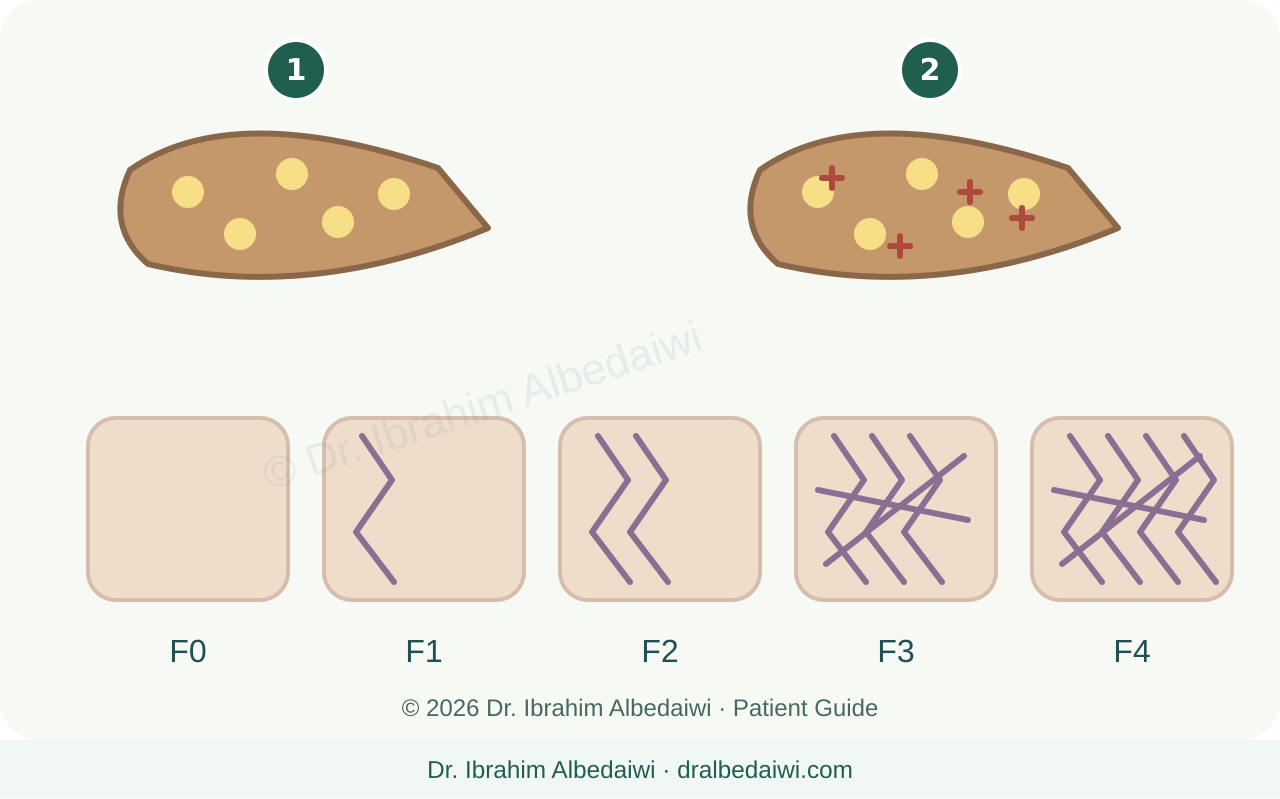
- 1 · Fat accumulation: MASLD
Fat builds up inside liver cells.
- 2 · Steatohepatitis: MASH
Fat accompanies liver-cell injury and inflammation; scars may develop.
- F0 · No fibrosis
This staging system describes scarring, not the amount of liver fat.
- F1–F3 · Fibrosis before cirrhosis
F1: mild · F2: moderate · F3: advanced bridging fibrosis, before F4.
- F4 · Cirrhosis
Extensive scarring alters liver structure and may affect blood flow and function.
Fibrosis can regress when its cause is treated, especially earlier stages. F4 can also improve, but this does not guarantee a normal liver or remove the need for follow-up. Progression is not inevitable; enzymes or stiffness alone cannot establish the stage.
© 2026 Dr. Ibrahim Albedaiwi · Original patient illustrationsHow do we assess your condition?
- We review diabetes, cholesterol and other blood fats, blood pressure and medicines, and rule out other causes when necessary. We may use blood tests to estimate the likelihood of scarring, followed by a liver stiffness measurement such as FibroScan.
- Normal liver enzymes do not rule out scarring. Only some people need a biopsy.
- Tell your doctor if a parent, sibling or child has cirrhosis related to fatty liver. Family history may affect your assessment even at a normal weight; this does not mean that everyone needs genetic testing.
A realistic weight goal
- If you are overweight, losing about 5% may reduce liver fat; 7–10% may improve inflammation, and around 10% or more may help scarring. Your goal should be gradual and tailored to you.
- For example, at a weight of 90 kg, losing 5–10% means approximately 4.5–9 kg.
Exercise is part of treatment
- Exercise can reduce liver fat even if your weight does not change. Gradually work towards more than 150 minutes of moderate activity a week, or 75 minutes of vigorous activity when appropriate, combined with muscle strengthening. Start with less according to your ability; advanced cirrhosis or significant illness needs an individual plan.
Your everyday plan
- Fill half your plate with vegetables, a quarter with protein and a quarter with a moderate portion of rice or other grains. Choose grilled rather than fried food, and cut back on sugary drinks, juices and sweets.
- Manage diabetes, blood pressure and cholesterol, and avoid alcohol. Do not stop your cholesterol medicine yourself; fatty liver alone does not prevent its use.
Treatment and follow-up
- Weight-management or diabetes medicines may suit some patients. Targeted treatments for steatohepatitis include semaglutide and resmetirom for selected adults with stage 2 or 3 scarring, without stage 4. These medicines are not suitable for everyone with liver fat; your specialist assesses eligibility, regulatory approval and local availability, alongside continued balanced eating and activity.
- Do not start vitamin E or herbal “liver cleanses” without a prescription. Have your weight, blood tests and scarring assessment reviewed as planned, even if you feel well.
- Bariatric surgery may be useful for suitable patients; advanced liver scarring requires specialist assessment before a decision.
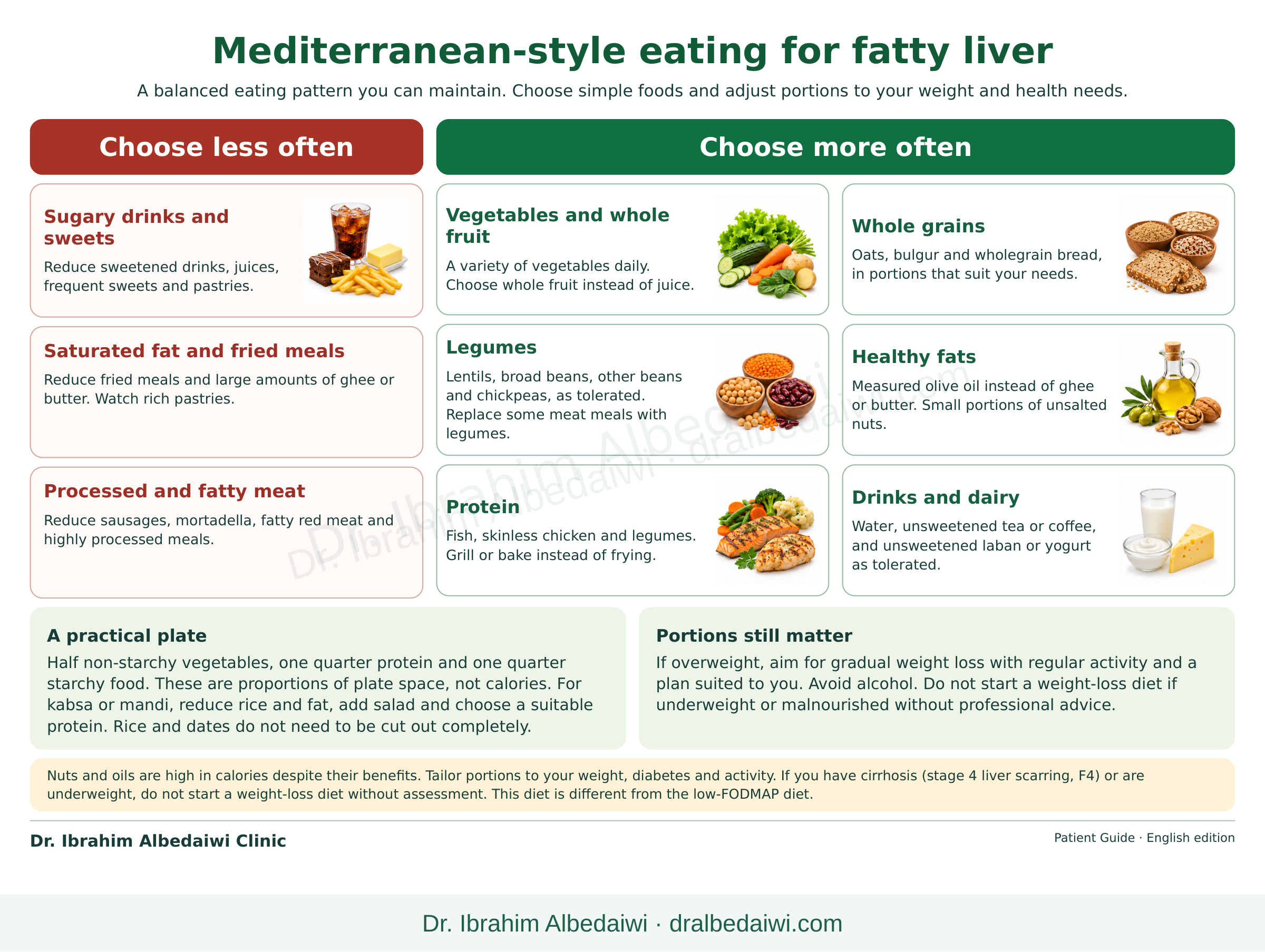
Mediterranean-style eating for fatty liver
A balanced eating pattern you can maintain. Choose simple foods and adjust portions to your weight and health needs.
Build a balanced plate
Vegetables, suitable portions of whole grains, legumes or other protein, and measured olive oil.
Reduce sugary drinks
Choose water and whole fruit more often; portions still matter.
Choose more often
- A variety of vegetables and whole fruit rather than juice.
- Whole grains such as oats, bulgur and wholegrain bread, in portions that suit your needs.
- Legumes such as lentils, broad beans, other beans and chickpeas, as tolerated; use them to replace some meat meals.
- Fish, skinless chicken and a variety of protein sources, including legumes. Grill or bake instead of frying.
- Measured amounts of olive oil instead of ghee and butter.
- Small portions of unsalted nuts.
- Water, unsweetened tea or coffee, and unsweetened laban or yogurt as tolerated.
Reduce gradually
- Sweetened drinks and juices.
- Frequent sweets and pastries.
- Processed meat, such as sausages and mortadella, fatty red meat and highly processed meals.
- Fried meals and large amounts of ghee.
- Large portions of rice and bread.
Fill half the plate with non-starchy vegetables, one quarter with protein and one quarter with starchy foods. These proportions refer to plate space, not calories.
For kabsa or mandi, reduce the rice and fat, add salad and choose a suitable protein. You do not need to cut out rice or dates completely.
Portions matter, even with healthy choices
If you are overweight, aim for gradual weight loss with regular activity and a plan suited to you. Avoid alcohol. Do not start a weight-loss diet if you are underweight or malnourished without professional advice.
Nuts and oils are high in calories despite their benefits. Tailor portions to your weight, diabetes and activity. If you have cirrhosis (stage 4 liver scarring, F4) or are underweight, do not start a weight-loss diet without assessment. This diet is different from the low-FODMAP diet.
When to get help
Vomiting blood, black, tarry stools even without dizziness, new confusion, or severe jaundice with a general deterioration.
New jaundice, swelling of the abdomen or legs, or unintentional weight loss.
Guides for your care journey
Read the related guides together:
Related guides
Herbs, mixtures and supplements: benefits and risks
Raised liver enzymes: what do they mean?
Probiotics: when can they help?