


Crohn’s disease
Content date: 13 November 2026
Crohn’s is a chronic inflammatory condition that can be controlled. The goal is to improve your quality of life and settle inflammation inside the bowel, even when symptoms ease.
Your next step
Check that you have enough medicine and know when your inflammation assessment is due, and record any change from your usual pattern.
Get urgent help: Severe pain with bloating and vomiting or inability to pass gas, heavy bleeding or fainting, or increasing pain and a tender swelling around the anus, especially with fever, chills or general deterioration.
Understanding the condition: what exactly happens?
- Crohn’s disease is a chronic inflammatory bowel disease. The immune system becomes inappropriately active in the digestive tract, causing inflammation that may persist or return in flares. Genetic and environmental factors and gut microbes contribute; it is not caused by one dietary mistake or by stress alone.
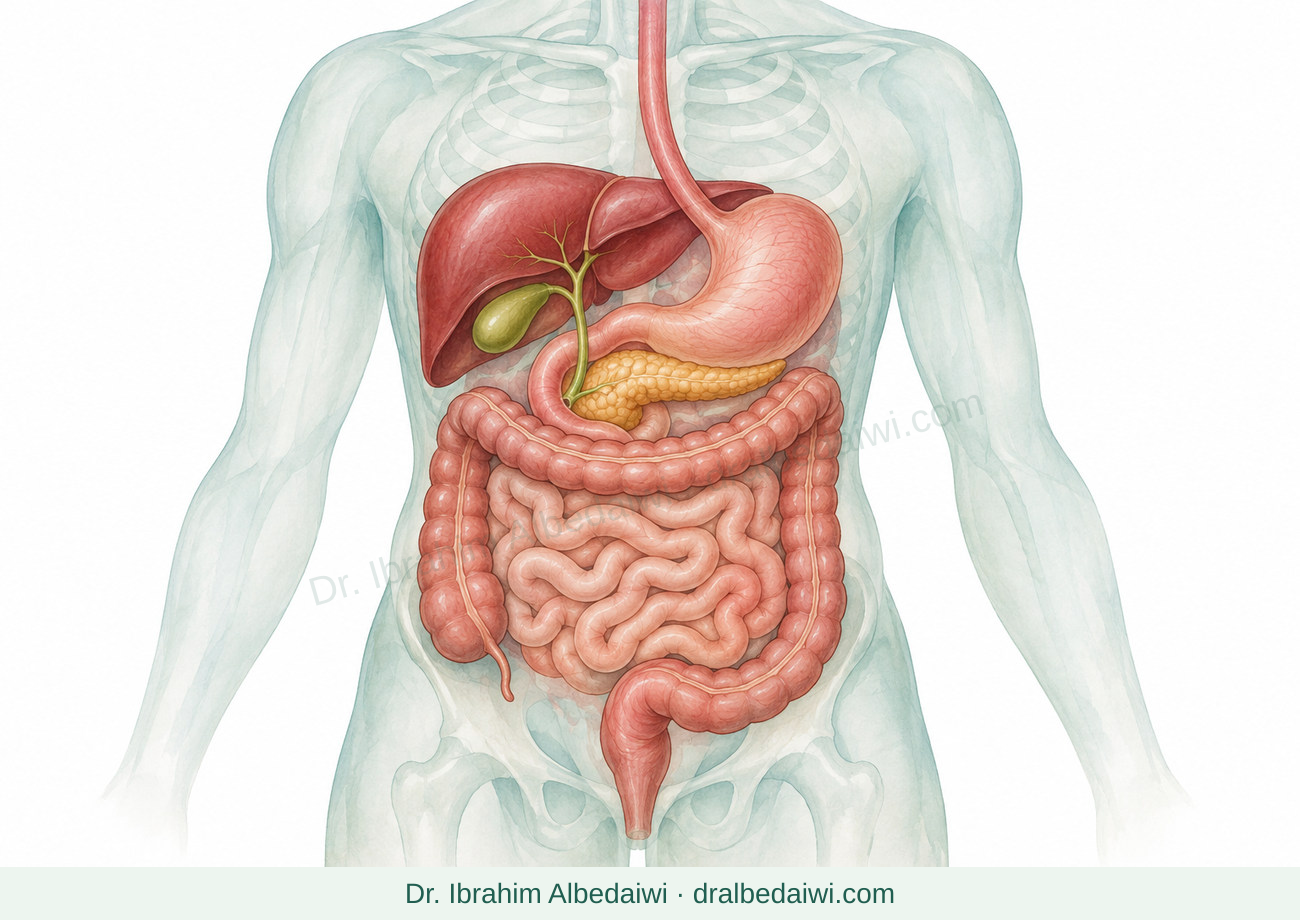
- It can affect anywhere from the mouth to the anus, most commonly the end of the small intestine and the colon. Inflamed areas may be separated by healthy areas. Inflammation can extend deep into the bowel wall, explaining the possibility of narrowing, an abnormal tunnel called a fistula, or a collection of pus called an abscess.
How is it confirmed, and can it be controlled?
- Symptoms depend on the location of inflammation: diarrhea, abdominal pain, tiredness and weight loss, sometimes with problems around the anus. Some people also have joint, eye or skin involvement. No single symptom or test establishes the diagnosis; the doctor combines your history, blood and stool tests, endoscopy and biopsies, and may need small-bowel imaging.
- Crohn’s is not an infection that spreads to others, and differs from irritable bowel syndrome. Treatment aims to calm the immune response, heal inflammation, maintain nutrition and avoid complications. Long periods of remission are possible, but pain disappearing does not remove the tendency to develop disease, so follow-up and preventive treatment continue according to the plan.
Active disease or remission?
- A flare means increased disease activity, often with more symptoms. In remission, activity settles and symptoms are absent or minimal. Tests may still be needed to assess inflammation; continue treatment and follow-up as planned.
ILLUSTRATED PATIENT GUIDE
Crohn’s disease and ulcerative colitis
Darker areas show example sites of inflammation, not a measure of disease severity.
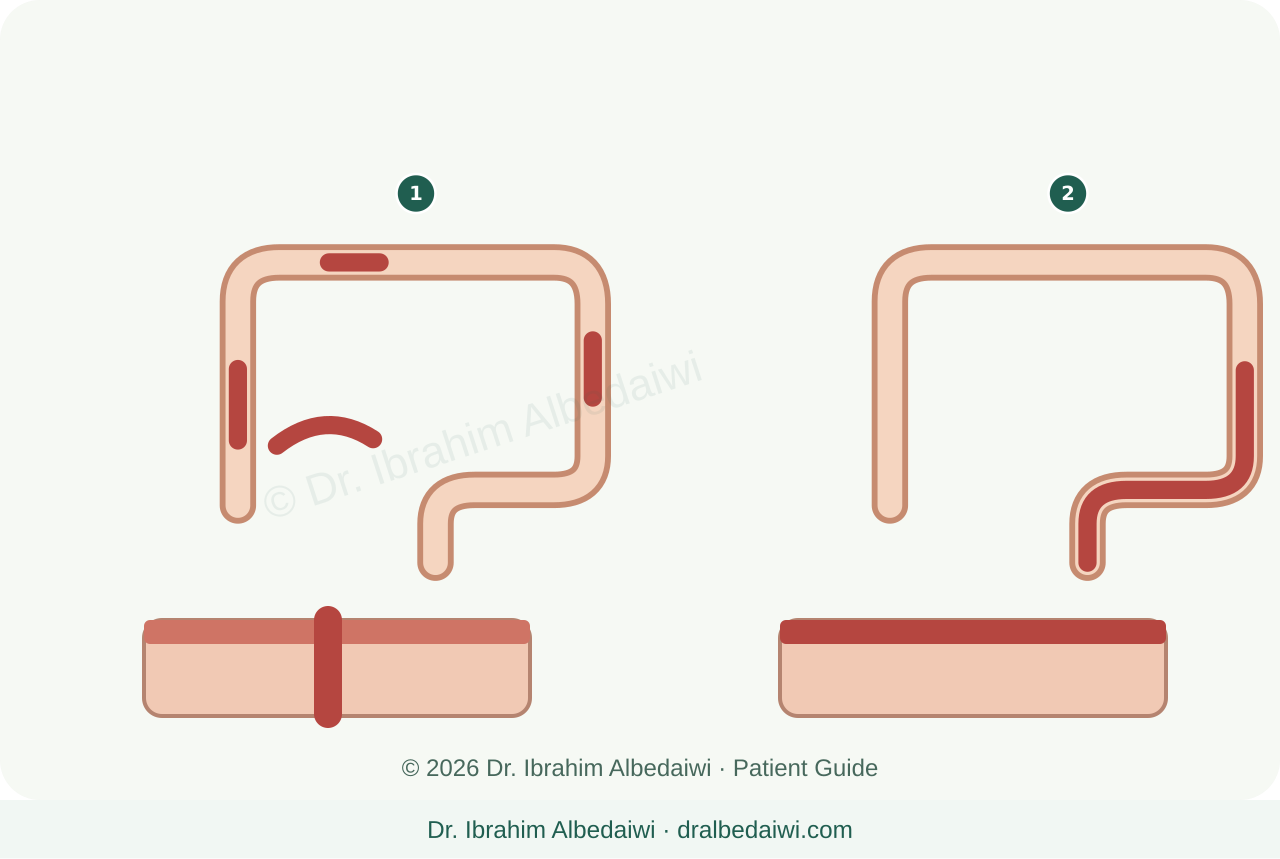
- 1 · Crohn’s disease
Can affect any part from mouth to anus, commonly the small bowel and colon. Inflamed areas may be separated by healthy bowel, and inflammation can involve the full bowel wall.
- 2 · Ulcerative colitis
Affects the colon and rectum. It usually starts in the rectum and extends continuously, mainly affecting the inner lining.
Both can have active periods and periods of remission. These are general patterns; tests, endoscopy and biopsies establish the diagnosis.
© 2026 Dr. Ibrahim Albedaiwi · Original patient illustrationsILLUSTRATED PATIENT GUIDE
Fistulas and strictures in Crohn’s disease
These complications occur in some patients; they are not inevitable.

- 1 · Fistula
An abnormal tunnel linking bowel to another bowel segment, another organ or skin. This example connects two bowel segments. A fistula can also occur around the anus; it differs from an anal fissure.
- 2 · Stricture
A narrowed bowel segment caused by inflammation, scarring or both, which may obstruct passage.
Severe pain with swelling, vomiting or inability to pass gas needs urgent assessment. Painful anal swelling with fever may indicate an abscess.
© 2026 Dr. Ibrahim Albedaiwi · Original patient illustrationsHow do we monitor it?
- We monitor symptoms, blood tests and fecal calprotectin (a marker of inflammation), and may need endoscopy or imaging. Improved symptoms do not prove inflammation has gone. We review nutrition, iron and vitamin B12 according to your needs.
- Agree a written flare plan and a schedule for tests and endoscopy with your team. You may need regular colonoscopies for bowel cancer surveillance if colonic inflammation has lasted a long time; your doctor sets the timing according to your risk factors.
Treating flares and maintaining remission
- Corticosteroids settle a flare for a limited period and are not used for long-term maintenance of remission in Crohn’s. Follow the tapering plan and do not stop suddenly.
- Immunomodulators such as azathioprine or methotrexate may be used in specific circumstances and require blood-test monitoring. Methotrexate is taken weekly, not daily, and is unsuitable during pregnancy. Mesalazine is not a usual effective treatment for Crohn’s; do not change your prescription yourself.
Biologic and targeted treatments
- Biologics target specific parts of the inflammatory process and are given by intravenous infusion or injection under the skin. Examples include infliximab, adalimumab, vedolizumab, ustekinumab and risankizumab. We may choose them early for moderate or severe disease; they are not necessarily a last resort.
- Targeted tablets are also available for some patients, with particular precautions concerning infection, blood clots and pregnancy depending on the medicine. Your team chooses treatment after reviewing your condition, tests and vaccinations.
Using treatment safely
- Continue maintenance treatment even when you improve. If you have a fever or infection, contact your team before the next dose, and do not double a missed dose. Injection, storage and monitoring instructions differ between medicines; open your medicine card in the related guides below.
Fistulas in Crohn’s: what are they?
- A fistula is an abnormal tunnel-like channel connecting the bowel to the skin or another organ. It can form because Crohn’s inflammation extends deep into the bowel wall. Fistulas around the anus are most common, but they may also connect parts of the bowel to each other, or the bowel to the bladder or vagina.
- A fistula differs from an anal fissure, which is a small tear in the lining of the anal opening. It also differs from an abscess, a collection of pus, although a fistula and an abscess may occur together. A fistula does not mean poor hygiene, and not every fistula is caused by Crohn’s.
What symptoms should I report?
- A fistula around the anus may appear as an opening that drains pus, fluid or blood, with skin irritation or recurring swelling and pain. Depending on the connection, there may be gas in the urine, recurrent urinary infections, or gas or stool passing through the vagina. Tell your team if these occur.
- Increasing pain or a tender swelling around the anus, especially with fever, chills or marked tiredness, may indicate an abscess and needs urgent assessment. Do not wait for a clinic appointment or squeeze the swelling. A deep abscess can occur without a visible opening or fever.
How are fistulas investigated and treated?
- An examination, pelvic MRI or examination under anesthesia may be needed to map the tract and rule out an abscess. The gastroenterologist and colorectal surgeon usually coordinate care, protecting the muscles that control bowel movements.
- An abscess may need drainage; antibiotics alone are usually insufficient. A flexible drainage thread called a seton may be placed through the fistula tract to keep it draining and reduce pus buildup. It is part of treatment; do not pull it out or cut it yourself.
- Biologic treatment may be used to control Crohn’s inflammation and help the fistula heal after treating any infection or abscess. Some cases need further surgery. Drainage stopping or the skin opening closing does not by itself prove that the internal tract has healed; follow-up matters.
Food and everyday life
- No single diet cures Crohn’s. Eat a varied diet with enough protein, and seek dietitian support if you lose weight or find eating difficult.
- If you have a narrowing, your team may temporarily recommend soft foods low in coarse fiber. Do not begin a high-fiber diet without advice if you have a stricture.
- Avoid painkillers such as ibuprofen and diclofenac without medical advice.
Smoking affects the course of Crohn’s itself
- Smoking increases the likelihood of Crohn’s flares, surgery and recurrence after surgery. Quitting is therefore an important part of treatment, not simply general health advice, and can help at any stage of the disease.
- Complete cessation is best; even light smoking is not considered safe in Crohn’s. If you cannot stop immediately, make cutting down a step within a quit plan, and agree a date and suitable support with your doctor. Quitting does not replace prescribed treatment.
- Ask for a referral to a smoking cessation clinic and discuss behavioral support, stop-smoking medicines or nicotine replacement as appropriate for you. If you resumed smoking after a previous attempt, try again with your team and adjust the plan.
Care between flares
Review my vaccination, screening and preventive-care checklist
When to get help
Severe pain with bloating and vomiting or inability to pass gas, heavy bleeding or fainting, or increasing pain and a tender swelling around the anus, especially with fever, chills or general deterioration.
Persistent worsening diarrhea, new nighttime diarrhea, weight loss, or fever while taking immunosuppressive treatment; contact your team the same day for fever. Also report an opening or recurrent discharge around the anus, gas in the urine, or gas or stool passing through the vagina.
Guides for your care journey
Read the related guides together:
Related guides
Biologic infusions: what to expect
Nutrition with Crohn’s disease and ulcerative colitis
Pregnancy and breastfeeding with bowel and liver disease
Mesalazine / mesalamine medicine card
Probiotics: when can they help?
Understanding faecal calprotectin results
Stoma care and when to seek help