


Gallbladder and bile duct stones
Content date: 10 November 2026
A stone does not always require intervention, but persistent pain, fever or jaundice may indicate obstruction or inflammation needing urgent treatment.
Your next step
Confirm the stone treatment plan and date of surgery or stent follow-up if needed.
Get urgent help: Severe pain or pain lasting several hours, fever or chills, jaundice, repeated vomiting, or dark urine with pale stool; do not wait for all these signs to occur together.
Understanding the condition: what do the gallbladder and bile do?
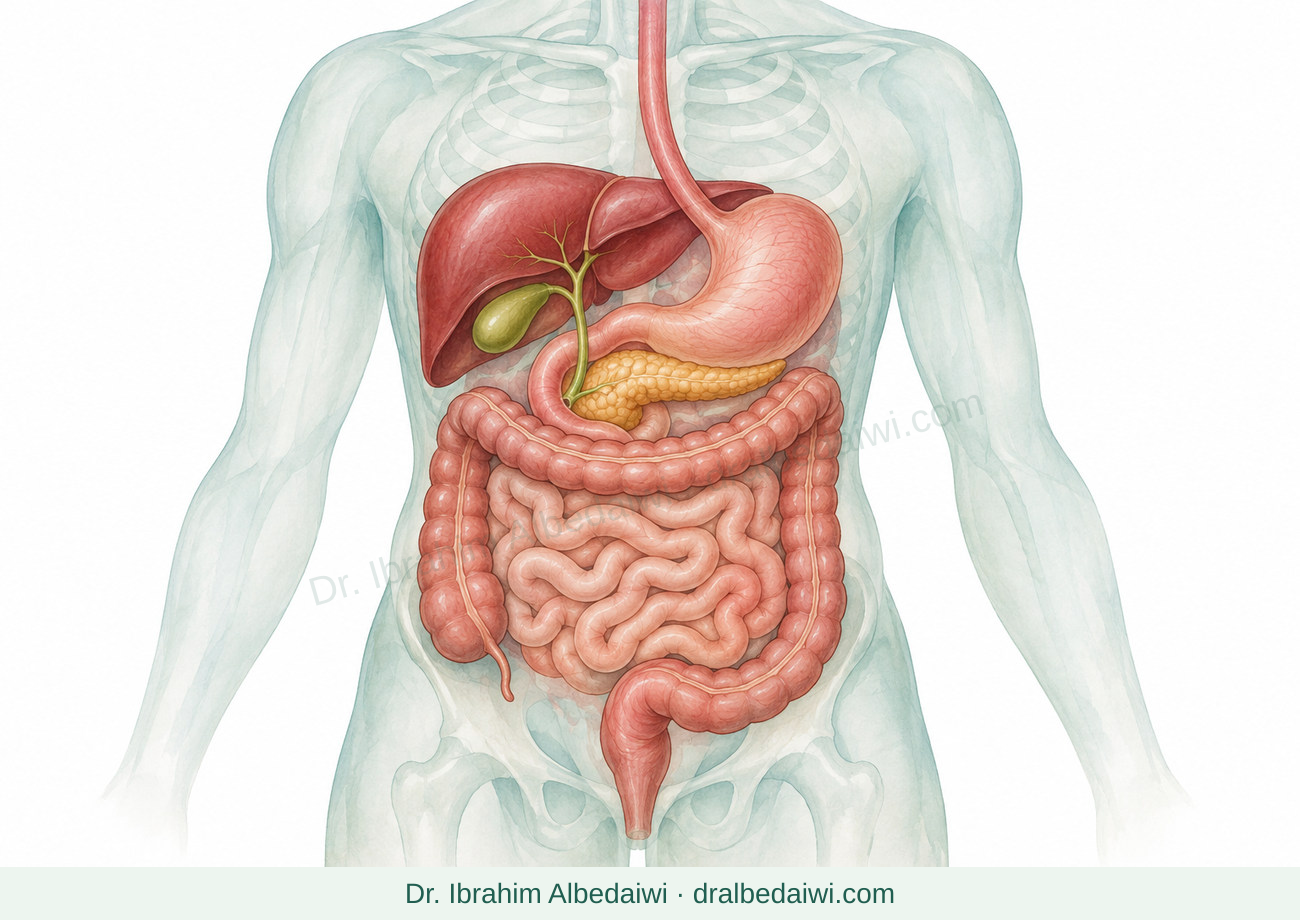
- The liver makes bile, a fluid that helps digest fat. The gallbladder stores it in a small sac beneath the liver, then releases it into the intestine through narrow ducts. Some bile components, such as cholesterol or pigments, can collect to form small or large solid stones.
- A stone inside the gallbladder without obstruction or inflammation may cause no symptoms. Problems occur when it temporarily blocks the gallbladder outlet, causing pain, or the blockage persists and inflammation develops. If it moves into the main bile duct, it can cause jaundice or a duct infection and may contribute to pancreatitis. Gas and bloating alone do not prove a stone is responsible.
Why do treatment plans differ?
- Decisions depend on the stone’s location and effects, not size alone. Ultrasound helps identify gallbladder stones, while blood tests look for inflammation or obstruction. MRCP or endoscopic ultrasound may be needed for a suspected duct stone not clearly seen on initial imaging.
- A silent gallbladder stone usually does not require surgery. A stone in the main bile duct may need removal even without symptoms, if the person’s condition allows, to prevent obstruction and infection. Repeated pain or complications may require gallbladder removal or duct treatment. You can live without a gallbladder because the liver continues making bile, which reaches the intestine without the same storage step. Dietary changes may reduce some attacks but do not guarantee stone removal or prevent blockage.
What is an attack like?
- Upper abdominal pain, particularly on the right, may spread to the back or shoulder and last from minutes to hours, sometimes after a fatty meal.
- We assess symptoms and use ultrasound and liver tests, sometimes with additional bile duct imaging.
What are the treatment options?
- Silent stones within the gallbladder usually do not need treatment. Stones causing pain or complications may require laparoscopic gallbladder removal.
- A bile duct stone may be removed by an endoscopic bile duct procedure, which differs from gallbladder removal; you may need both procedures.
- Stone-dissolving medicines suit only a few cases and are not a general alternative to surgery.
Until treatment is complete
- Reduce meals you have noticed trigger pain, especially large or fatty meals. Choose moderate meals without eliminating fat completely.
- Avoid rapid weight loss and crash diets. Do not use oil-and-lemon mixtures or “gallbladder cleanses”; they have not been shown to remove stones and may delay treatment.
- Use only the painkiller chosen by your doctor, and do not treat ongoing pain or fever as an ordinary attack.
After gallbladder removal
- You can live normally without a gallbladder. Smaller, lower-fat meals may be better tolerated initially, followed by a balanced diet as tolerated.
- A temporary change in stools may occur. Persistent diarrhea deserves review; there are possible causes and treatments.
- Follow your surgeon’s wound, activity and medicine instructions. If a bile duct stent was placed, confirm its removal or replacement date and do not neglect follow-up.
When to get help
Severe pain or pain lasting several hours, fever or chills, jaundice, repeated vomiting, or dark urine with pale stool; do not wait for all these signs to occur together.
Repeated attacks, an unclear surgical plan, or an unclear stent follow-up date if a stent is present.
Related guides
Bile duct stones and obstructive jaundice