


Bile duct stones and obstructive jaundice
Content date: 10 November 2026
A stone inside the drainage duct differs from one remaining in the gallbladder. New jaundice needs prompt assessment; fever or pain can signal an emergency.
Your next step
Ask whether the stone is in the gallbladder or duct, whether treatment is complete, and when stent and gallbladder follow-up are due.
Get urgent help: Fever or chills with jaundice or upper abdominal pain; severe persistent pain with vomiting; confusion, fainting or major deterioration. Go to emergency care immediately and mention any duct stent. Do not wait for all symptoms to appear.
What happens when a duct is blocked?
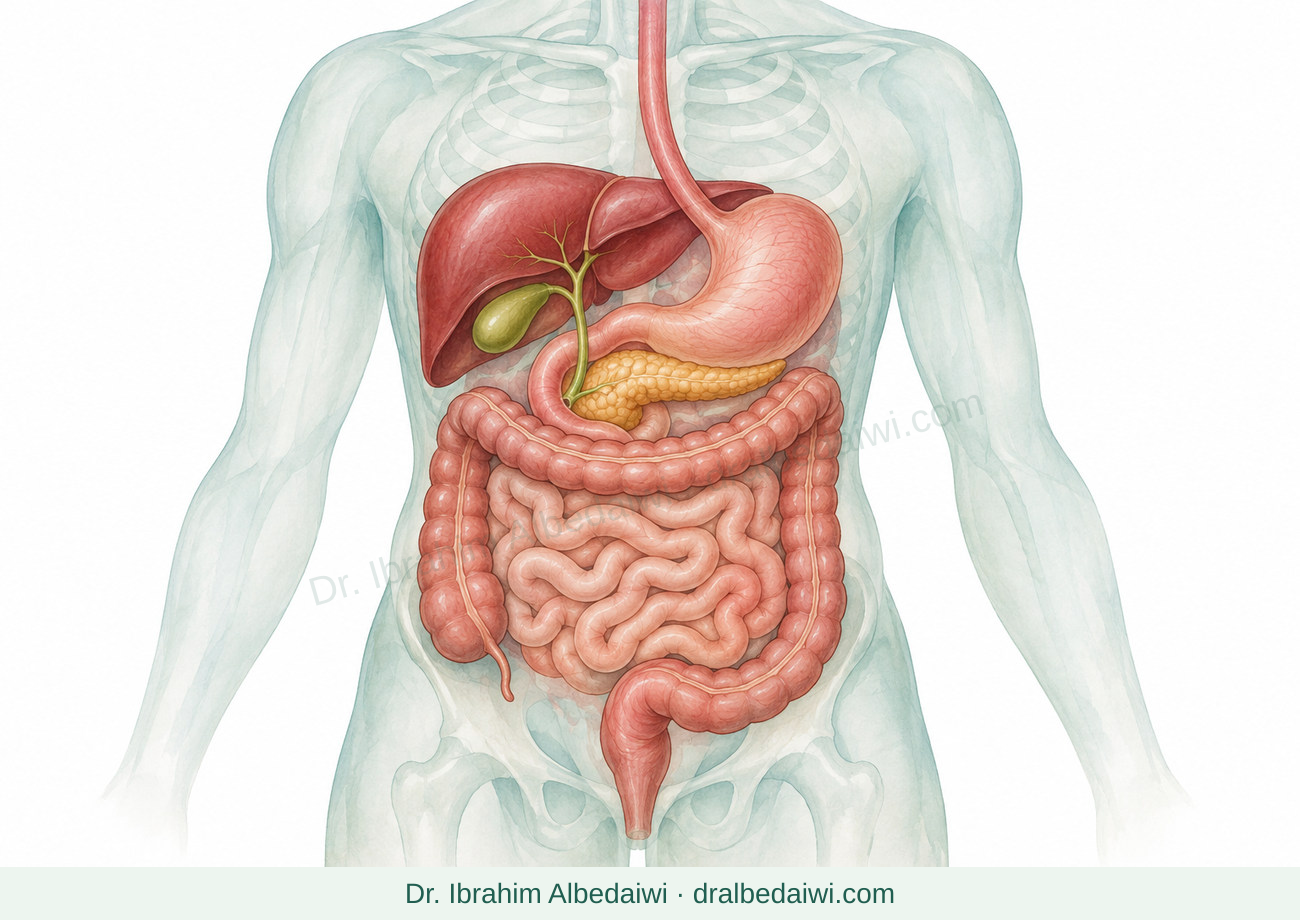
- The liver makes bile to help digest fats, and the gallbladder stores some of it. Ducts carry bile into the intestine. A stone can leave the gallbladder and lodge in the common bile duct. Bilirubin then accumulates, causing yellow eyes or skin, called jaundice.
- Symptoms may include dark urine, pale stools, itching, upper abdominal pain or nausea. Obstruction can also be painless. Not all jaundice comes from a stone or blockage; liver disease and other causes are possible. A benign narrowing or a tumor can also obstruct the duct, so tests must establish the cause.
ILLUSTRATED PATIENT GUIDE
How does ERCP work?
ERCP is mainly used for treatment, such as removing a duct stone or placing a stent.
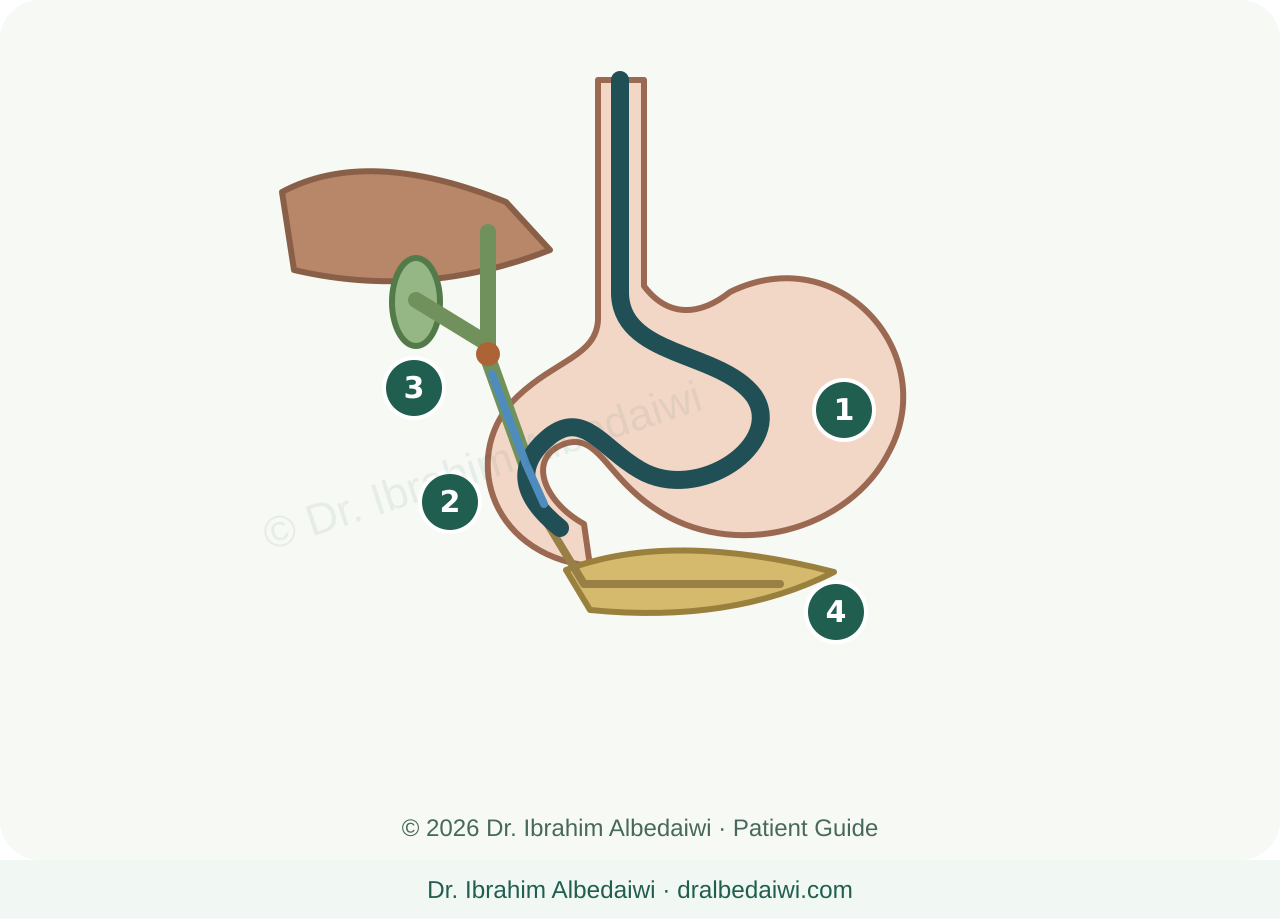
- 1 · Endoscope
Passes through the mouth and stomach into the duodenum.
- 2 · Duct opening
The scope tip stays in the duodenum beside the duct opening.
- 3 · Thin catheter
Enters the duct through its opening; the scope itself does not enter the duct. Contrast and X-rays show the duct.
- 4 · Pancreas
Its duct drains near the bile duct; treatment depends on the problem.
Simplified illustration. The team decides whether stone removal, narrowing treatment or a stent is needed.
© 2026 Dr. Ibrahim Albedaiwi · Original patient illustrationsFinding the cause
- Assessment usually starts with examination, liver and bilirubin blood tests and abdominal ultrasound. Further tests may check for infection or pancreatitis. Ultrasound does not detect every small duct stone.
- If suspicion remains, magnetic resonance imaging of the ducts (MRCP) or endoscopic ultrasound (EUS) may help. A narrowing or mass may need CT imaging or tissue sampling. One result or a tumor marker alone cannot diagnose cancer.
When does blockage become an emergency?
- Trapped bile can become infected, causing cholangitis. Fever or shaking chills with jaundice or upper abdominal pain needs emergency assessment; not all features have to be present. Confusion, fainting or marked deterioration adds urgency.
- Hospital treatment may include fluids, antibiotics and prompt drainage. Antibiotics alone do not remove a persistent blockage. A stone may also trigger pancreatitis: severe persistent pain, especially with vomiting or pain spreading to the back, needs urgent assessment.
Treating the underlying problem
- Duct stones are commonly removed by ERCP, sometimes after enlarging the drainage opening. If complete removal is not possible, a temporary stent may allow drainage until another session. Narrowings and tumors need a plan suited to their cause.
- Complex stones may require specialist fragmentation or another intervention. Occasionally surgery or another drainage route is needed. Your team weighs benefits and risks; jaundice does not automatically mean everyone needs ERCP.
Will I still need gallbladder surgery?
- Clearing the duct does not remove the gallbladder or stones inside it. If it is the source and you are fit for surgery, early gallbladder removal is usually advised after treating the duct to reduce recurrence. Timing depends on inflammation, recovery and your health.
- A confirmed duct stone differs from a silent gallbladder stone that may not need treatment. Do not cancel the treatment plan just because pain has stopped.
Stents and recovery
- Keep the stent type, location, removal or replacement date and unit contact details. Stents can block or move. Do not wait for symptoms before arranging follow-up; give any new team your procedure report.
- Follow the liver-test, scan and sample-result plan. Jaundice may take time to improve, but worsening or recurrent yellowing needs urgent contact. Diets, herbs and gallbladder cleanses cannot reliably clear a blocked duct.
When to get help
Fever or chills with jaundice or upper abdominal pain; severe persistent pain with vomiting; confusion, fainting or major deterioration. Go to emergency care immediately and mention any duct stent. Do not wait for all symptoms to appear.
New jaundice even without pain, or dark urine with pale stools and persistent itching: seek medical assessment the same day. Clarify any missing stent or gallbladder surgery plan.
Related guides
Gallbladder and bile duct stones
Bile and pancreatic duct endoscopy (ERCP)