

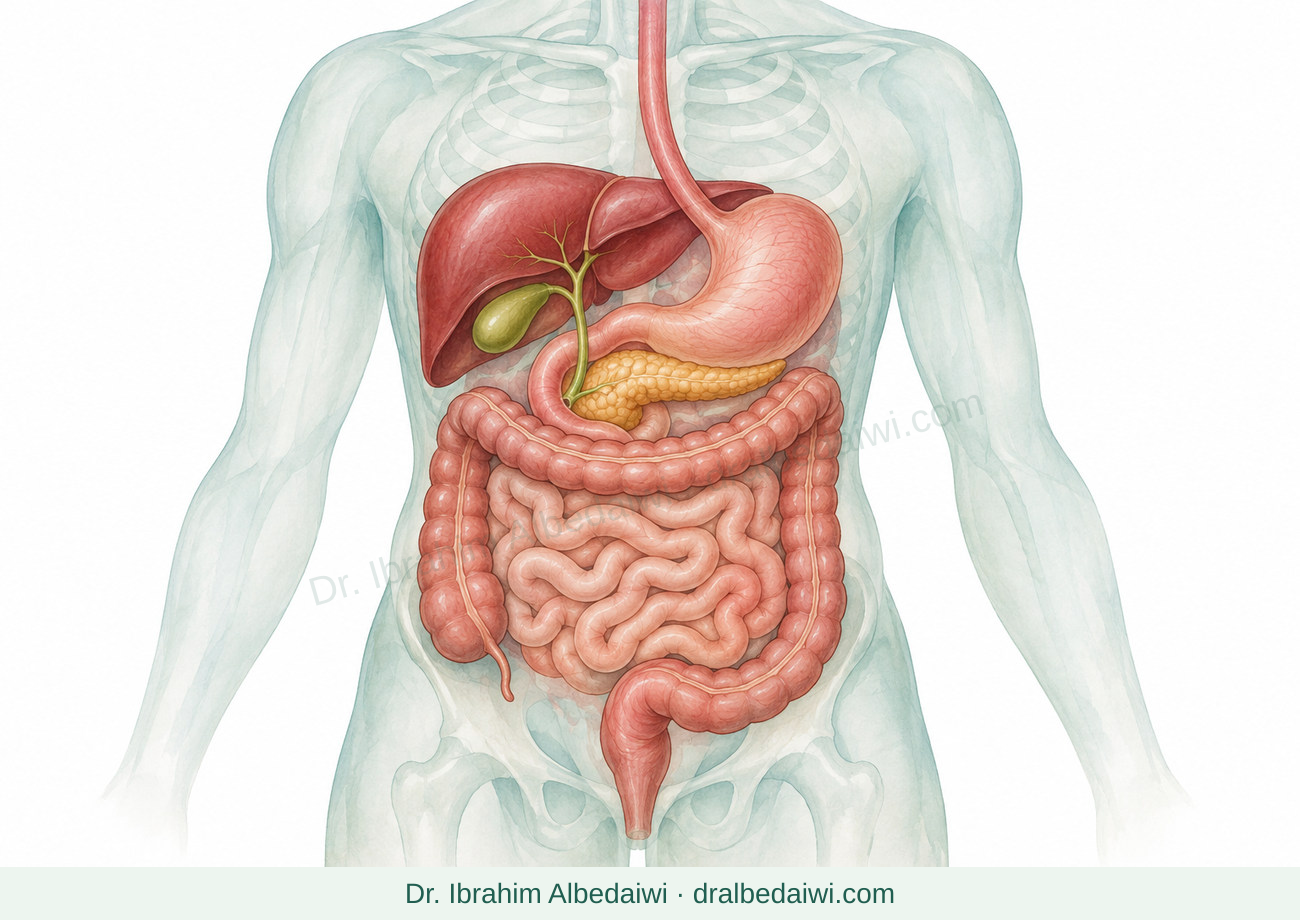

Ascites: abdominal fluid and drainage
Content date: 14 November 2026
Ascites is more than gas or weight gain. New abdominal fluid needs assessment of its cause and a clear plan for kidney function, blood salts and nutrition.
Your next step
Write down your weight, salt and medicine plan and dates for kidney and electrolyte tests.
Get urgent help: Fever, new abdominal pain, confusion, markedly reduced urine, bleeding or severe breathlessness: seek urgent emergency assessment.
What is ascites?
- Ascites is fluid inside the abdominal cavity. In cirrhosis, portal hypertension and salt and water retention contribute. Other causes exist, so not every swollen abdomen should be attributed to the liver. Ascites can cause early fullness, breathlessness and swollen legs.
Why take a fluid sample?
- A sample may be needed for new ascites, hospital admission or suspected infection. It helps identify the cause and detect infection, which can occur without obvious pain or fever. Blood tests alone cannot exclude infection in the fluid.
Your home plan
- Your doctor may recommend around 2 grams of sodium daily, roughly 5 grams of salt from all sources. Reduce salty pickles, canned foods and stock cubes without compromising nutrition. Not everyone needs fluid restriction; follow an individual limit if prescribed.
- Diuretics such as spironolactone or furosemide may be prescribed with kidney and blood-salt monitoring. Record weight at a consistent time and report changes according to your plan. Do not change doses or self-medicate with ibuprofen or diclofenac.
What happens during drainage?
- After explanation and medicine review, a small abdominal area is numbed and a thin tube drains the fluid, sometimes with ultrasound guidance. Removing a large volume may require intravenous albumin to protect circulation and kidneys. Do not stop blood thinners without team instructions.
- Leakage or discomfort can occur; bleeding, infection, organ injury or circulation problems are uncommon risks. Obtain aftercare instructions. Fluid returning does not mean drainage failed; treatment may need review, with TIPS or transplant assessment considered in selected cases.
A swelling at the navel: when is a hernia urgent?
- Ascites can accompany an umbilical hernia. Arrange review even if it is painless. Repair may be planned after fluid control and assessment of liver function and nutrition; it is not always necessary to wait for transplantation. Severe pain, a tender firm bulge, vomiting, darkening skin or fluid leaking through the skin needs emergency assessment. Do not try to force the bulge back yourself.
When to get help
Fever, new abdominal pain, confusion, markedly reduced urine, bleeding or severe breathlessness: seek urgent emergency assessment.
Rapidly increasing abdominal swelling or weight, poor intake, dizziness or persistent drainage-site leakage: contact your team promptly.
Related guides
Liver transplantation: when is evaluation needed?