

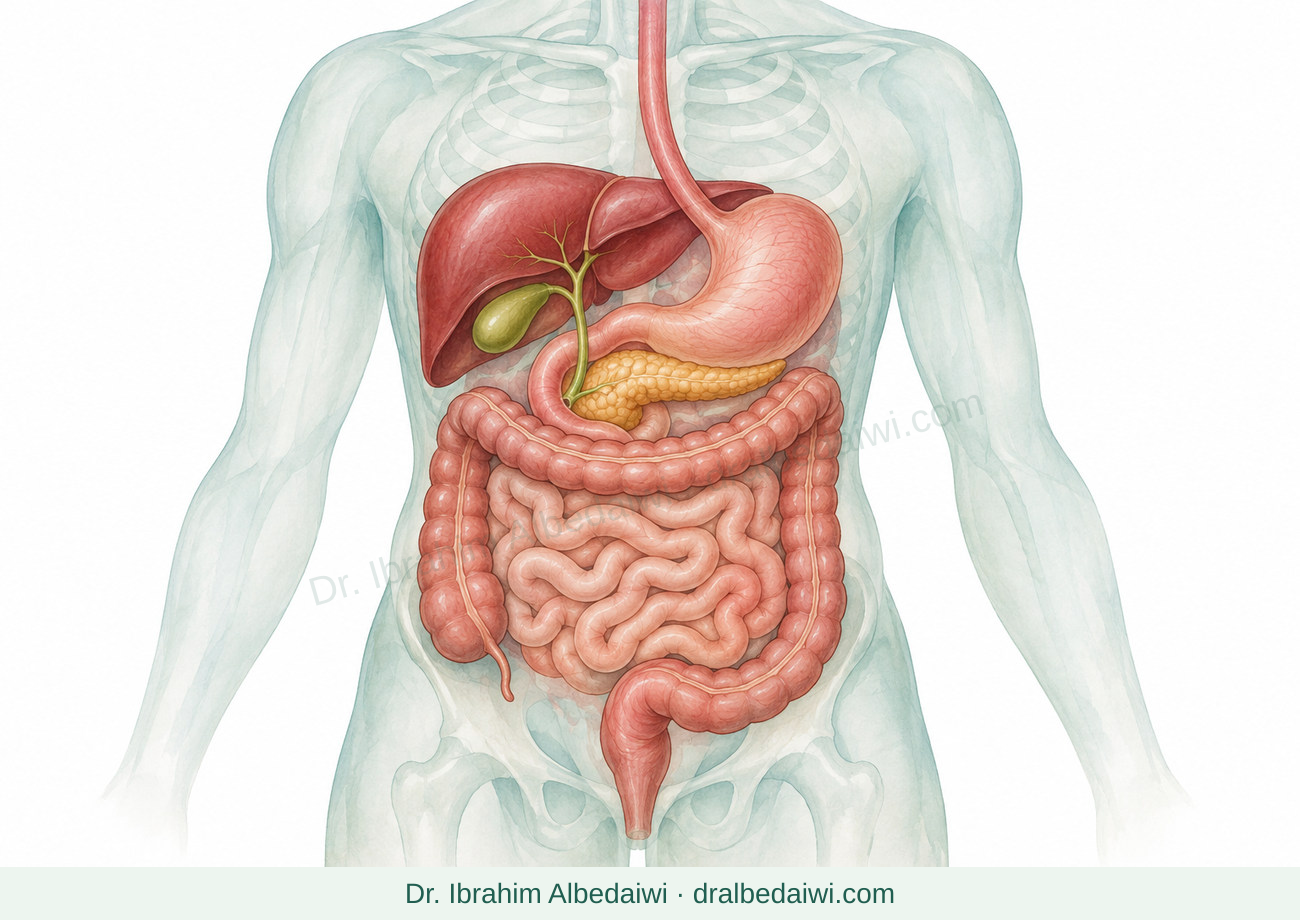

Budd-Chiari syndrome: blocked liver outflow
Content date: 10 November 2026
This rare condition obstructs blood drainage from the liver, suddenly or gradually. Treatment depends on the obstruction and liver function; not everyone needs a transplant.
Your next step
Bring imaging reports and your medicine list. Ask about the obstruction, anticoagulation, specialist review and the next scan.
Get urgent help: Severe or worsening abdominal pain, rapidly increasing swelling with breathlessness, vomiting blood, black stools, fainting, confusion or unusual drowsiness: seek emergency care immediately. Do not wait for a message reply.
How does it differ from portal vein thrombosis?
- The portal vein brings blood into the liver. The hepatic veins carry blood out toward the heart through the inferior vena cava. Budd-Chiari obstructs this outflow, causing congestion and increased pressure. A portal vein clot is different, although both may coexist.
- Hepatic veins or the inferior vena cava may be blocked by a clot, narrowing or membrane inside, or by external pressure. Liver congestion caused by heart failure is a different condition. Budd-Chiari is unrelated to Chiari malformation of the brain.
What symptoms can occur?
- Upper abdominal pain, liver enlargement or abdominal swelling from ascites, meaning fluid accumulation, may occur. Leg swelling, jaundice or fatigue may occur. Some cases are found without obvious symptoms.
- Severity ranges from stable chronic disease to rapidly worsening liver function. Varices with bleeding or confusion may develop in advanced cases.
Why does the obstruction occur?
- A tendency to clot may relate to blood or immune disorders or inherited factors. Pregnancy, postpartum changes or hormones may contribute. Finding one cause does not exclude others.
- A hematologist may investigate, sometimes with JAK2 testing for blood-cell production disorders. An initially unknown cause does not prevent appropriate treatment.
Confirming the diagnosis
- Doppler ultrasound usually assesses blood flow first. Contrast CT or MRI then defines the obstruction and helps plan treatment. Liver and kidney function, blood counts and clotting tests are also reviewed.
- Liver biopsy is unnecessary when imaging clearly establishes the diagnosis. It may be considered for suspected disease of small hepatic veins that imaging cannot show. Investigations are individualized.
Medicines and management of complications
- Primary Budd-Chiari, caused by a problem inside the veins, usually needs anticoagulation unless contraindicated. Treatment is generally long term and may be lifelong. Do not stop when pain or imaging improves without a specialist decision.
- Underlying conditions also need treatment, with plans for ascites or varices when necessary. Anticoagulant choice considers organ function, bleeding, interactions and pregnancy. Do not start aspirin or a herbal “clot dissolver”, or change treatment yourself.
Will I need an intervention or transplant?
- A short narrowing may suit balloon widening with or without a stent. If treatment is insufficient or reopening is unsuitable, a channel inside the liver called TIPS may reduce congestion. Liver, hematology and interventional-radiology specialists select the sequence according to anatomy and response.
- Transplantation is considered when disease cannot be controlled, or earlier with severe acute liver failure. Intervention or transplantation does not automatically remove the need to treat a clotting tendency.
Follow-up and pregnancy
- Follow-up checks symptoms, blood tests, imaging and any stent or shunt. Benign nodules can develop, but chronic disease still needs a liver-cancer surveillance plan, often every six months. Not every nodule is cancer.
- Pregnancy may be possible with coordinated liver, hematology and maternity care. Discuss plans and contraception beforehand. If pregnancy occurs while taking an anticoagulant, contact the team the same day to arrange appropriate treatment without an unplanned interruption.
When to get help
Severe or worsening abdominal pain, rapidly increasing swelling with breathlessness, vomiting blood, black stools, fainting, confusion or unusual drowsiness: seek emergency care immediately. Do not wait for a message reply.
A new diagnosis or suspected Budd-Chiari, increasing ascites or jaundice, reduced urine or difficulty taking anticoagulation needs prompt team contact. Pregnancy while anticoagulated needs same-day advice.
Related guides
Safe use of blood thinners (anticoagulants)
Ascites: abdominal fluid and drainage
Portal hypertension and esophageal or gastric varices