


Portal vein thrombosis
Content date: 10 November 2026
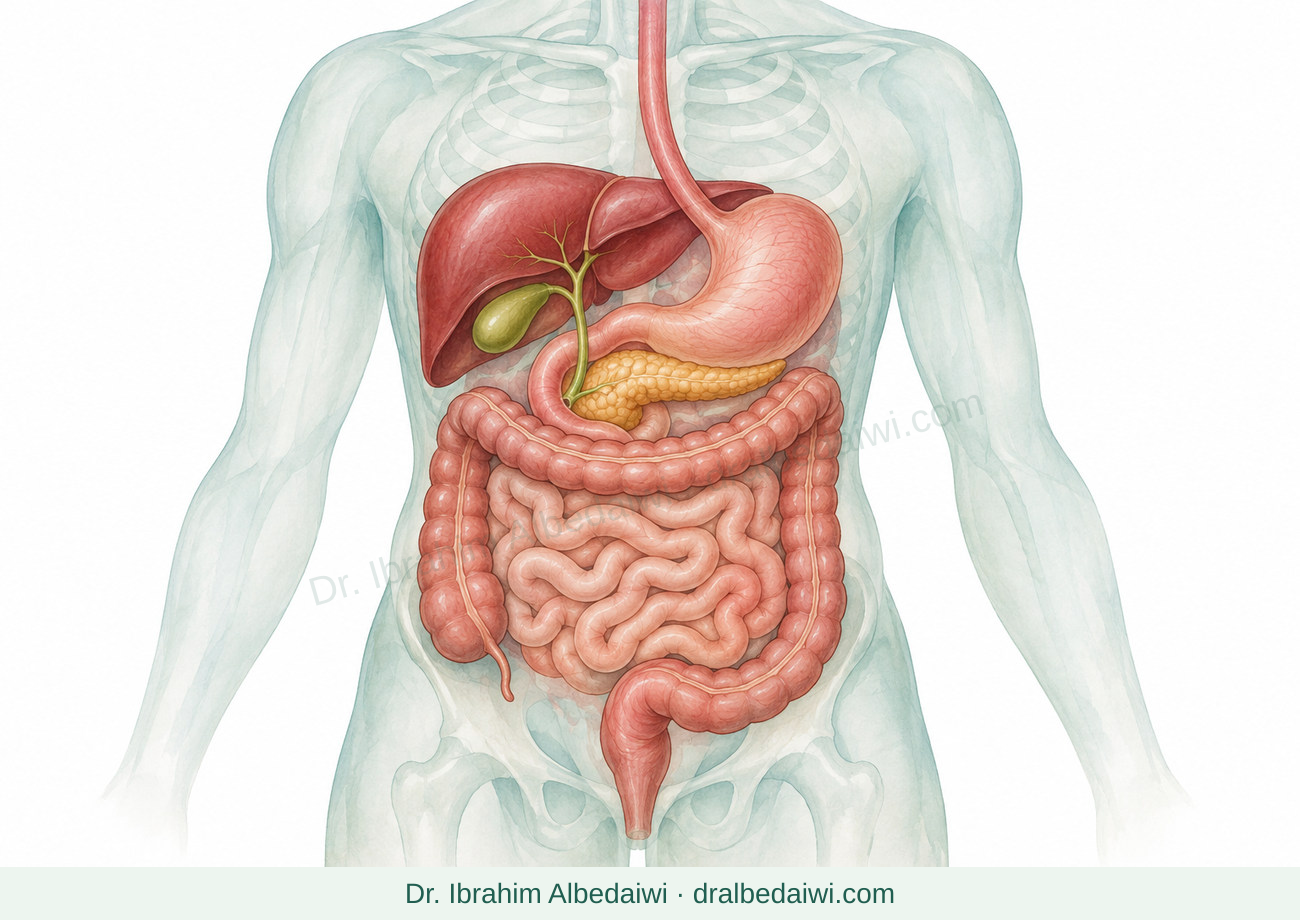
This is a clot in the vein carrying blood from the intestines and spleen to the liver. It does not automatically mean cancer. Treatment depends on how recent and extensive the clot is and on liver health.
Your next step
Bring your scan report and medicine list. Ask about clot extent, whether anticoagulation is needed and when imaging should be repeated.
Get urgent help: Sudden severe or worsening abdominal pain, especially with vomiting or bloody stool, vomiting blood, black stools or fainting: seek emergency care immediately. Severe pain may indicate impaired intestinal blood supply. Do not wait for a message reply.
What happens in the portal vein?
- Clotted blood partly or completely blocks the vein and may extend into intestinal or splenic veins. It may be found incidentally on imaging or cause pain and complications related to increased portal pressure.
- A recent clot differs from an old blockage with collateral vessels carrying blood through alternative routes. These vessels on a report do not alone mean an immediate emergency or that treatment cannot help; the specialist interprets the full findings.
Why did it happen? Does it mean cancer?
- Causes include cirrhosis with slow blood flow, abdominal inflammation or surgery. It can also occur without liver disease. Blood disorders or a tendency to clot may need investigation, especially with other clots or a family history.
- An ordinary blood clot differs from tumor growing into the vein. They require different plans; the word “thrombosis” alone does not establish the type. Contrast imaging helps distinguish them. A clot does not automatically imply cancer.
Confirming the diagnosis
- Doppler ultrasound can assess blood flow. Contrast CT or MRI may then define the location, degree of blockage, extent and any mass. Severe pain also prompts assessment for impaired intestinal blood supply.
- The team reviews older scans, liver and kidney tests, platelets and medicines. Not everyone needs the same clotting-disorder tests; cirrhosis and other risk factors influence which investigations help.
Will I need anticoagulants?
- Some limited, stable clots can be monitored with imaging. Others need anticoagulants (“blood thinners”) to prevent extension and help restore flow. Timing, extent, progression, bleeding risk and possible transplantation guide the decision.
- Recent clots without cirrhosis usually need anticoagulation. Older blockages require different consideration; “chronic” does not automatically mean stop treatment. Suspected intestinal injury is an emergency requiring specialist care.
Varices and bleeding risk
- Assessment for enlarged esophageal or stomach veins, called varices, and prevention of bleeding may be needed. Varices do not automatically rule out anticoagulation; the team balances bleeding against clot-extension risk and coordinates both treatments.
- Do not delay prescribed anticoagulation yourself while waiting for an endoscopy. Do not start anticoagulants, aspirin or herbal mixtures to treat the clot. Tell the team about previous or current bleeding.
If an anticoagulant is prescribed
- Treatment may involve injections or tablets. Choice depends on liver and kidney function, interactions and pregnancy where relevant. Do not substitute products. Ask what to do about a missed dose and which tests and reviews are needed.
- Tell every clinician and pharmacist, particularly before endoscopy, dental extraction or surgery. Do not stop treatment yourself or add ibuprofen or supplements without advice; they may increase bleeding or interact with treatment.
Follow-up and liver transplantation
- Repeat imaging shows whether the clot has improved or progressed. Some plans use three-monthly scans; your team sets the schedule and treatment duration. Less pain is not a reason to stop anticoagulation.
- Selected patients may benefit from procedures to reopen the vein or a TIPS shunt. A clot does not automatically exclude transplantation but may change planning. Inform the transplant team promptly.
When to get help
Sudden severe or worsening abdominal pain, especially with vomiting or bloody stool, vomiting blood, black stools or fainting: seek emergency care immediately. Severe pain may indicate impaired intestinal blood supply. Do not wait for a message reply.
A new scan report describing portal vein thrombosis, persistent new pain, or unusual bruising or bleeding while anticoagulated needs prompt contact with the team for assessment and a plan.
Related guides
Portal hypertension and esophageal or gastric varices
Ascites: abdominal fluid and drainage
Liver transplantation: when is evaluation needed?
Liver cancer: diagnosis and treatment