


Food guide for fatty liver
Content date: 14 November 2026
Sustainable everyday choices. The amounts below are starting points, not a fixed calorie prescription; a dietitian tailors them to weight, diabetes and activity.
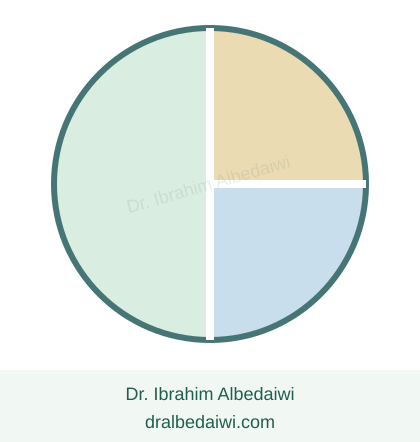 | A balanced plate Half non-starchy vegetables One quarter protein: fish, chicken or legumes One quarter starch: rice, bread or grains The diagram shows the area of the plate, not the proportion of calories. |
| From our table | A practical adjustment | Approximate starting portion |
|---|---|---|
| Kabsa or mandi | Use less rice and fat; choose skinless chicken with salad | Half to one cup of cooked rice; a palm-sized portion of protein |
| Jareesh or qursan | Reduce ghee and fat and add vegetables and protein | A small bowl; do not automatically add bread or rice |
| Breakfast | Eggs or unsweetened laban with wholegrain bread and vegetables | Choose a bread portion that fits your goal |
| Dates and fruit | A measured alternative to sweets; whole fruit is preferable to juice | One small fruit or 1–2 small dates |
| Drinks | Water, tea or coffee without sugar, as tolerated | Gradually reduce juices and sweetened drinks |
Portion size, reducing liquid sugar and consistency matter most. Nuts and oils can be useful in small amounts but are high in calories.
This week’s goal
Choose one goal: replace a sweetened drink, reduce the rice portion or walk regularly. Do not use “liver cleansing” mixtures. If you have advanced liver fibrosis or are underweight, do not start a weight-loss diet without assessment.
An example of a balanced day
- Breakfast: eggs or unsweetened laban with wholegrain bread and cucumber or tomato.
- Lunch: grilled fish or chicken, salad and a moderate amount of rice or bulgur.
- Dinner: lentil soup or fava beans with a little oil, vegetables and a suitable bread portion.
- If a snack is needed: whole fruit or a small amount of unsalted nuts. These are examples, not a compulsory calorie plan.
Three common questions
- Should I avoid fruit? Whole fruit does not need to be excluded; account for portions in your diet. Limit juice even if fresh and without added sugar. Honey is not an unlimited substitute for sugar.
- Does coffee treat the liver? Studies associate it with lower risks of some liver diseases, but it does not replace treatment. If you already drink and tolerate it, limit sugar and additions; do not start it as a medicine. Caffeine may worsen insomnia, palpitations and reflux.
- Is intermittent fasting necessary? It is not required for improvement; choose a pattern you can sustain. Restricting eating to certain hours has not been shown to add a liver benefit beyond comparable calorie restriction, so the priority is a balanced pattern you can sustain. Consult the team before fasting if you take diabetes medicines. Do not start it yourself with cirrhosis, malnutrition or an eating disorder.
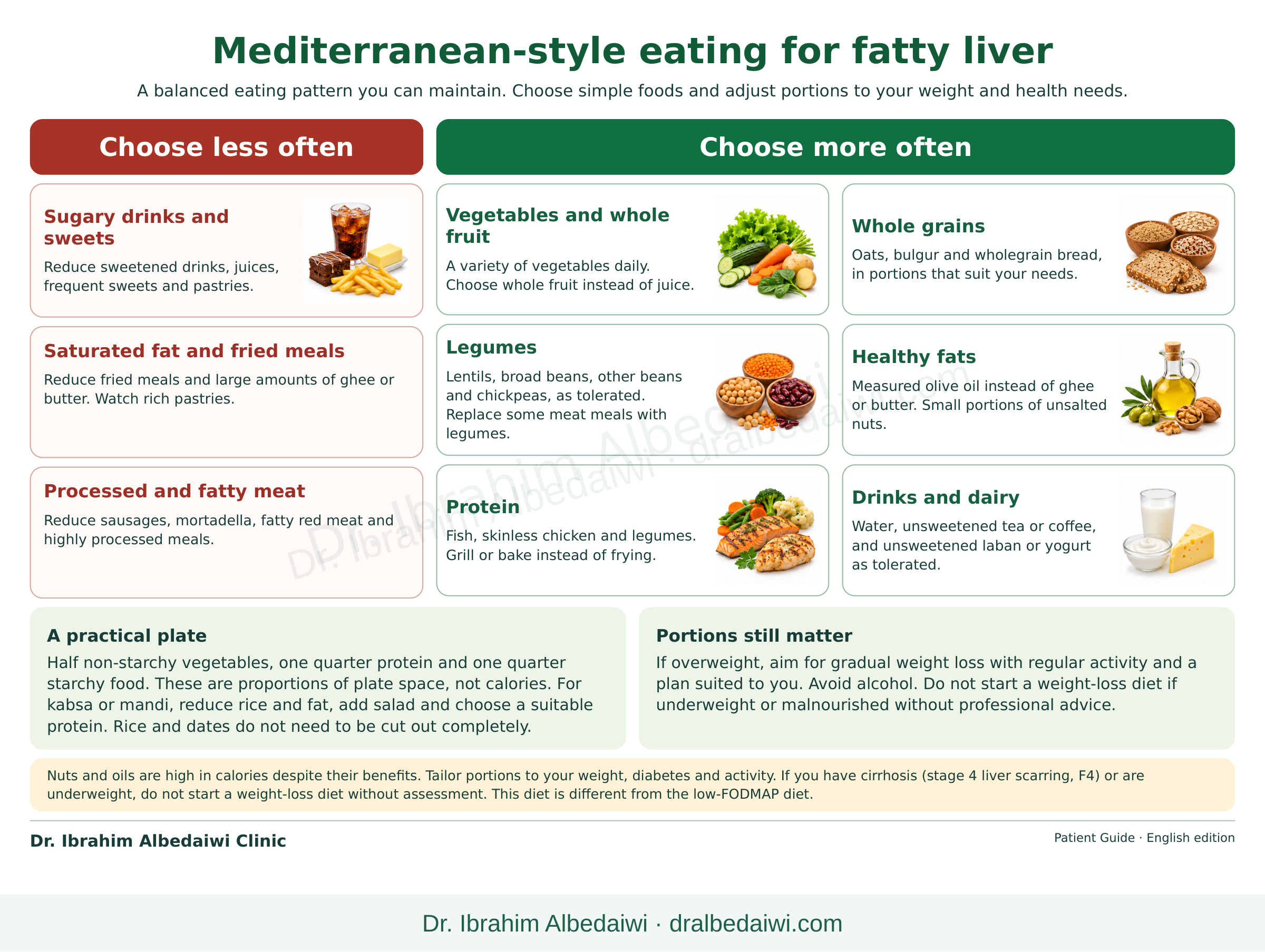
Mediterranean-style eating for fatty liver
A balanced eating pattern you can maintain. Choose simple foods and adjust portions to your weight and health needs.
Build a balanced plate
Vegetables, suitable portions of whole grains, legumes or other protein, and measured olive oil.
Reduce sugary drinks
Choose water and whole fruit more often; portions still matter.
Choose more often
- A variety of vegetables and whole fruit rather than juice.
- Whole grains such as oats, bulgur and wholegrain bread, in portions that suit your needs.
- Legumes such as lentils, broad beans, other beans and chickpeas, as tolerated; use them to replace some meat meals.
- Fish, skinless chicken and a variety of protein sources, including legumes. Grill or bake instead of frying.
- Measured amounts of olive oil instead of ghee and butter.
- Small portions of unsalted nuts.
- Water, unsweetened tea or coffee, and unsweetened laban or yogurt as tolerated.
Reduce gradually
- Sweetened drinks and juices.
- Frequent sweets and pastries.
- Processed meat, such as sausages and mortadella, fatty red meat and highly processed meals.
- Fried meals and large amounts of ghee.
- Large portions of rice and bread.
Fill half the plate with non-starchy vegetables, one quarter with protein and one quarter with starchy foods. These proportions refer to plate space, not calories.
For kabsa or mandi, reduce the rice and fat, add salad and choose a suitable protein. You do not need to cut out rice or dates completely.
Portions matter, even with healthy choices
If you are overweight, aim for gradual weight loss with regular activity and a plan suited to you. Avoid alcohol. Do not start a weight-loss diet if you are underweight or malnourished without professional advice.
Nuts and oils are high in calories despite their benefits. Tailor portions to your weight, diabetes and activity. If you have cirrhosis (stage 4 liver scarring, F4) or are underweight, do not start a weight-loss diet without assessment. This diet is different from the low-FODMAP diet.
Guides for your care journey
Read the related guides together:
Related guides
Fatty liver and steatohepatitis