

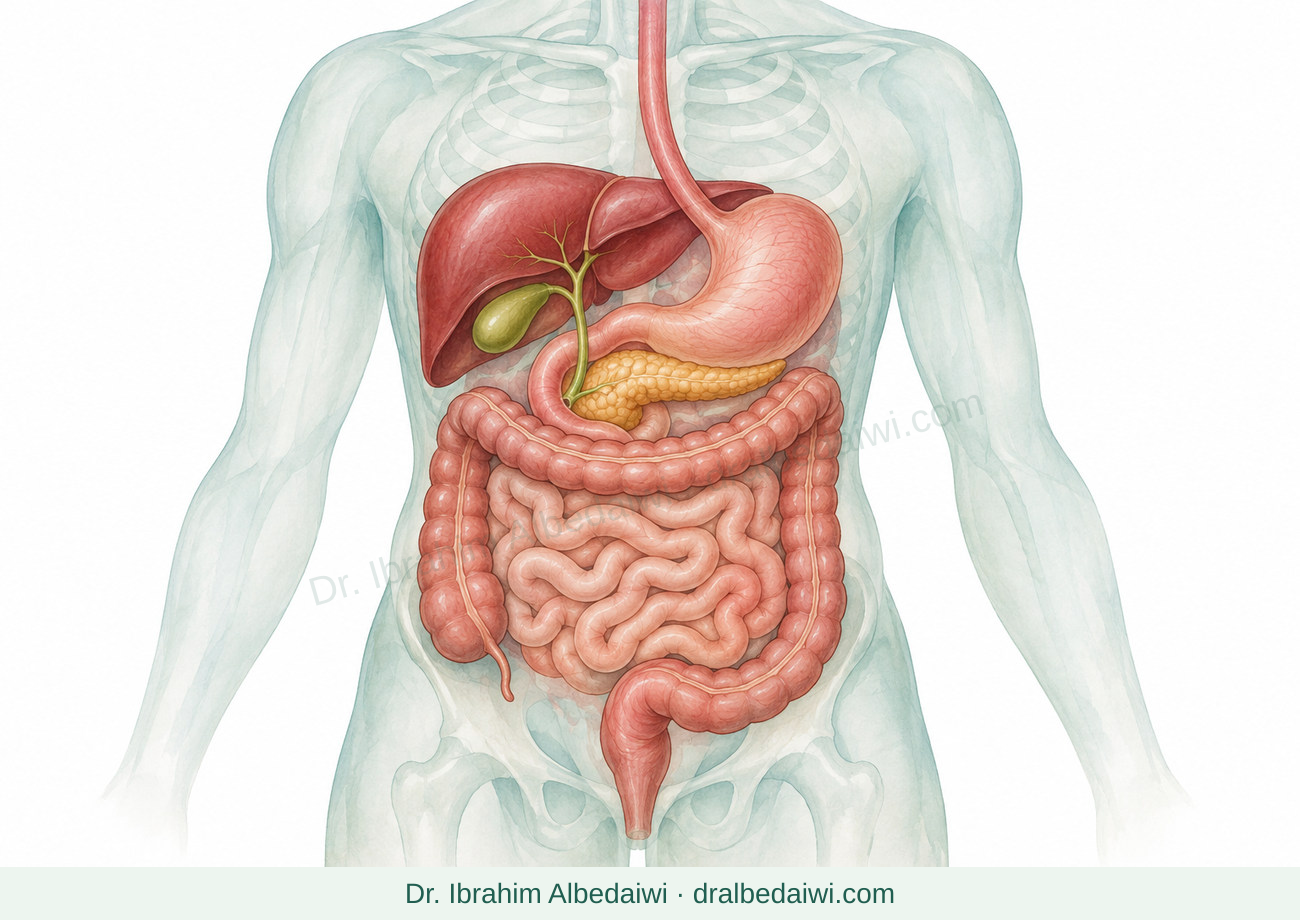

Primary sclerosing cholangitis (PSC)
Content date: 15 November 2026
A chronic disease causing bile duct narrowing. Organized follow-up and treatment of obstruction and infection are important even when symptoms are mild.
Your next step
Record your bile duct imaging, colonoscopy and any stent follow-up appointments.
Get urgent help: Fever or chills, new upper abdominal pain or worsening jaundice need urgent assessment, especially with a biliary stent. Do not wait for these signs to occur together. Confusion, fainting, vomiting blood or rapid deterioration require emergency care.
What does bile duct scarring mean?
- Bile ducts carry bile made by the liver to the bowel. In PSC, the duct walls become inflamed and scarred, creating narrowed areas that impede bile flow. Ducts inside and outside the liver may be affected, potentially leading to liver injury and fibrosis over time.
- The exact cause is unknown; immune activity, genetic susceptibility and other factors are thought to contribute. It is not an infection spread by contact. Narrowed ducts may develop a bacterial infection as a complication. This infection is separate from the underlying chronic disease and needs prompt treatment when symptoms appear.
Why does follow-up involve several areas?
- There may initially be no symptoms, or itching, fatigue, abdominal discomfort or jaundice may occur. Abnormal bile-related blood tests may draw attention, but duct imaging helps show the location and nature of narrowing. Sometimes the large ducts are normal and small-duct disease requires a different assessment.
- We monitor the liver, ducts and bowel because PSC may coexist with inflammatory bowel disease, and complications can start without clear symptoms. Imaging or a biopsy does not mean cancer is present; the aim is to exclude important causes of narrowing and monitor risk according to your situation. Progression varies, and treatment depends on symptoms, obstruction and liver function, not the disease name alone.
How is it related to other diseases?
- PSC differs from primary biliary cholangitis (PBC), which generally affects small ducts inside the liver. PSC may coexist with ulcerative colitis or Crohn’s disease, sometimes without obvious bowel symptoms.
Tests and follow-up
- MRI of the bile ducts (MRCP) is commonly used, alongside liver blood tests and fibrosis assessment. A biopsy may be needed in selected cases.
- Colonoscopy with biopsies is generally recommended at diagnosis to check for inflammatory bowel disease, even without bowel symptoms. If IBD is present, colon surveillance is closer, often every one to two years according to the plan. Your specialist sets repeat timing from the findings.
- The specialist determines surveillance for bile duct and gallbladder cancers. This may include yearly imaging for adults with large-duct disease; plans differ in other situations.
Treatment
- No medicine guarantees that disease progression will stop in everyone. We treat itching, infection and important strictures. A specialist may select medicines or clinical studies for some patients.
- ERCP is used for treatment when needed, not routinely at every visit. Samples may be taken from an important stricture, or a temporary stent inserted.
If a stent is inserted
- Obtain a written date for its removal or exchange. Do not leave it without follow-up even if blood tests improve.
- After a biliary stent, new fever or chills, new upper abdominal pain or worsening jaundice need urgent assessment. Do not wait for these signs to occur together or for a routine appointment.
Long-term care
- Monitor itching, fatigue, nutrition and bone health; vitamin tests may be needed. Do not start high-dose vitamins or bile-related medicines yourself.
- Avoid alcohol, smoking and unknown supplements. Advanced liver fibrosis requires additional monitoring for its complications.
- Liver transplantation may be discussed for liver failure, severe complications or repeated infections. This is a specialist decision, not one based on a single blood test.
When to get help
Fever or chills, new upper abdominal pain or worsening jaundice need urgent assessment, especially with a biliary stent. Do not wait for these signs to occur together. Confusion, fainting, vomiting blood or rapid deterioration require emergency care.
Increasing itching or jaundice, unexplained weight loss or an unclear stent follow-up date.
Related guides
Bile duct stones and obstructive jaundice
Bile and pancreatic duct endoscopy (ERCP)